
Emergency Chimney Sweep Near Me: What South Hill Homeowners Should Do First
A chimney fire sounds like a low rumble or a roar coming from inside the fireplace, and most homeowners who have lived through one didn’t recognize it for the first 30 seconds. Those 30 seconds matter more than how fast you find a phone number. If you’re searching for an emergency chimney sweep near you in South Hill, the first move depends on what’s actually happening. Get that part right and you contain the problem. Get it wrong and you can make a small fire into a structural one.
We handle the sweep and anything we find, so we’ll walk you through the triage first. If you’d rather have someone look at it than puzzle through it yourself, call (877) 792-6671. We answer 24/7. Fast dispatch from 7am to 7pm, Sunday through Friday.
Which of the Three South Hill Chimney Emergencies Are You In?
Almost every panicked call we take from a South Hill homeowner falls into one of three buckets, and each one needs a different first response. Figure out which one is yours before you do anything else.
- An active chimney fire. You hear roaring or a low rumble, see flames or sparks at the top of the flue, notice the stovepipe glowing, or smell a hot, metallic odor. Get everyone out of the house and call the fire department first. A chimney fire can spread into the attic framing, and that’s a firefighting problem, not a sweeping problem.
- Smoke or carbon monoxide coming into the living space. Smoke rolls back into the room when you light a fire, or a CO alarm sounds. Get people and pets outside into fresh air, and call your gas utility or 911 if the alarm is active. Don’t relight anything to “test” it.
- Structural damage after a storm. A cap blows off, mortar and bricks land in the yard, the crown cracks, or you see daylight through the flue. Keep fires out of the fireplace until someone looks at it, and stay off the roof yourself.
Sorting your situation into one of those three is the single most useful thing you can do in the first minute. Then when you call, you can describe what you’re seeing, and that’s what gets you the right help.
What to Do While a Chimney Fire Is Still Burning
If you believe a chimney fire is active, treat it as a house fire until a professional tells you otherwise. Call the fire department, get out, and stay out. Those are the only first steps that count. What you do with the fireplace itself matters, though, and some instincts are backwards.
Opening the damper all the way is the wrong instinct. A wide-open damper feeds the fire more air and can pull more flame into the chimney. Better to close the glass doors if you have them, close the damper once you’re sure no one is in the room, and put the fire out by cutting its air supply. If you have a chimney fire extinguisher or can safely toss baking soda or sand onto the logs, that’s reasonable. Never pour water into a hot firebox or flue. The thermal shock can crack tiles and the cast firebox.
Don’t climb onto the roof to look down the chimney, and don’t spray a garden hose into the flue from outside. Both are common reactions and both cause injuries. A hot chimney and ladder are a bad combination.
Once the fire is out, don’t relight until a professional has inspected the system. A chimney fire often leaves damage you can’t see from the hearth: cracked flue tiles, warped damper, damaged liner. That’s the point where a Level 2 inspection becomes non-negotiable.
Is Your South Hill Home Safe to Stay In After a Chimney Fire?
Maybe. The honest answer is that nobody can tell you from a phone description, and that’s exactly why the inspection happens before the next fire. Here’s how to judge the situation in the meantime.
- Look for visible fire spread. Check the attic and any space around the chimney chase for charring, smoke staining, or a hot spot on the wall. If you find any, leave and call 911.
- Check your carbon monoxide detector. If it’s active or has a fresh alarm, get everyone outside into fresh air and call for help. Don’t assume it’s a false alarm.
- Watch for smoke smell that doesn’t clear. Lingering creosote or smoke odor in the house after the fire is out can point to a breach you can’t see.
- Treat the fireplace as out of service. No wood until the sweep and inspection are done. That’s not caution for its own sake. A compromised flue can pass carbon monoxide into living space.
If the fire stayed in the firebox, there was little smoke, and nothing around the chase feels warm or looks stained, your home is usually safe to stay in while you wait for a technician. If anything is uncertain, err on the side of leaving. We can look at the system the same day it’s booked, but your safety doesn’t wait for us.
What to Document Right Now for Your Insurance Claim
Insurance companies pay claims faster when the evidence arrives in one clean batch. Start gathering it before the technician pulls up, while the scene is still fresh.
- Photos and video, straight away. Shoot the firebox, the flue opening, the damper, the chimney exterior, and the roof from a safe distance. Capture anything that looks like damage and anything that proves it wasn’t a fire before. Photos of the room around the fireplace help too.
- Timestamps. Note when you first noticed the rumble or smoke, when you called the fire department, and when the fire was out. Insurance adjusters care about the sequence.
- Appliance model and serial numbers. Your fireplace, insert, or stove manual and nameplate carry this. It tells your adjuster exactly what’s damaged.
- The fire department report. If they responded, get the report number. That document is worth more than anything you can write down yourself.
- A written inspection report. A documented inspection, the kind your insurance company will expect to see, is the backbone of a chimney-fire claim. This is where we help. Our inspections are delivered in writing, so you have something to hand your adjuster, not a verbal impression.
One quiet tip: that photograph-it-now habit is also the best early warning you can give yourself. Water stains on the ceiling near the chimney chase, rust in the firebox, or a crumbling crown show up in photos long before they show up in a fire.
What “Emergency Service” Really Means for a Chimney Call
When you call about an active fire or CO problem, your call is answered 24/7. What happens next is dispatch. Fast dispatch runs 7am to 7pm, Sunday through Friday. If you call outside those hours, your job is booked into the next opening. No technician comes out at night, and nobody should tell you otherwise.
For a storm-damaged cap or crown, or a chimney that needs a sweep and inspection after a scare, the practical response is a same-day slot when it’s available, with a written estimate before any work. Most chimney emergencies can wait for the next dispatch window. A live fire cannot, and that’s a fire department call first.
Once a technician is on site, “emergency service” isn’t just a sweep. It’s a Level 2 inspection, which covers the firebox, damper, flue, liner, cap, and crown, plus the visible chimney structure. If damage turns up, we’re already the company that can fix it. We work with DuraFlex and Olympia Chimney liner systems and HeatShield resurfacing, so a cracked flue can usually be resolved from the same relationship rather than handing you off. Single-company accountability from diagnosis through repair is the whole reason we stock these lines.
When to Call a Pro: Your Related Services in South Hill
Here’s where a homeowner can help themselves and where it gets dangerous. DIY is fine for the little stuff. Things like checking your smoke and CO detectors, brushing soot off the hearth, or snapping a photo of the crown from the ground. From that point on, hand it off.
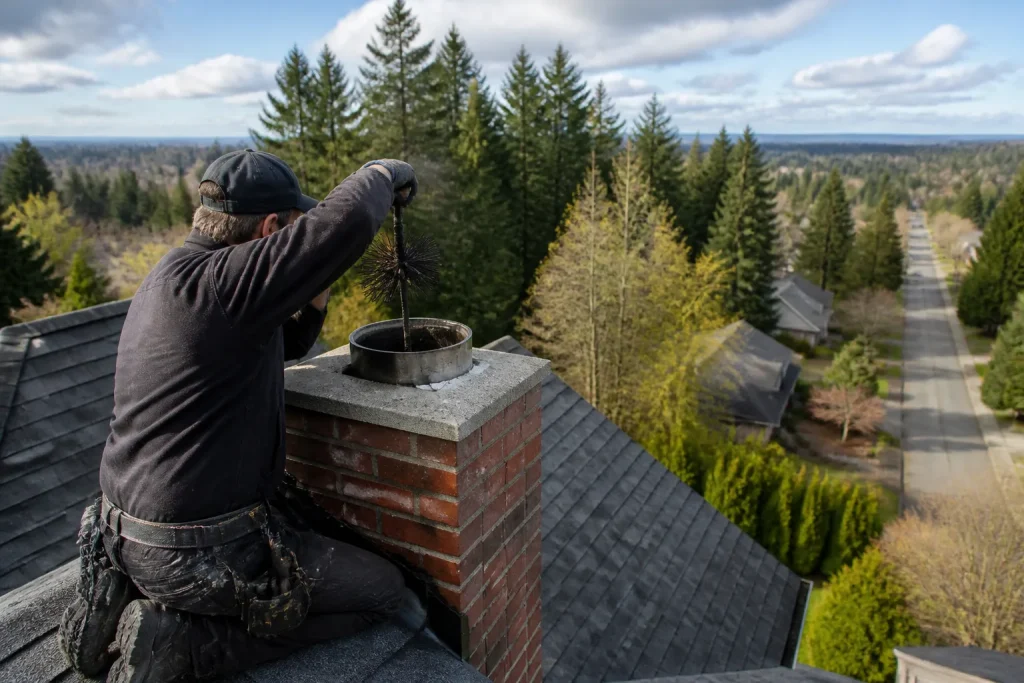
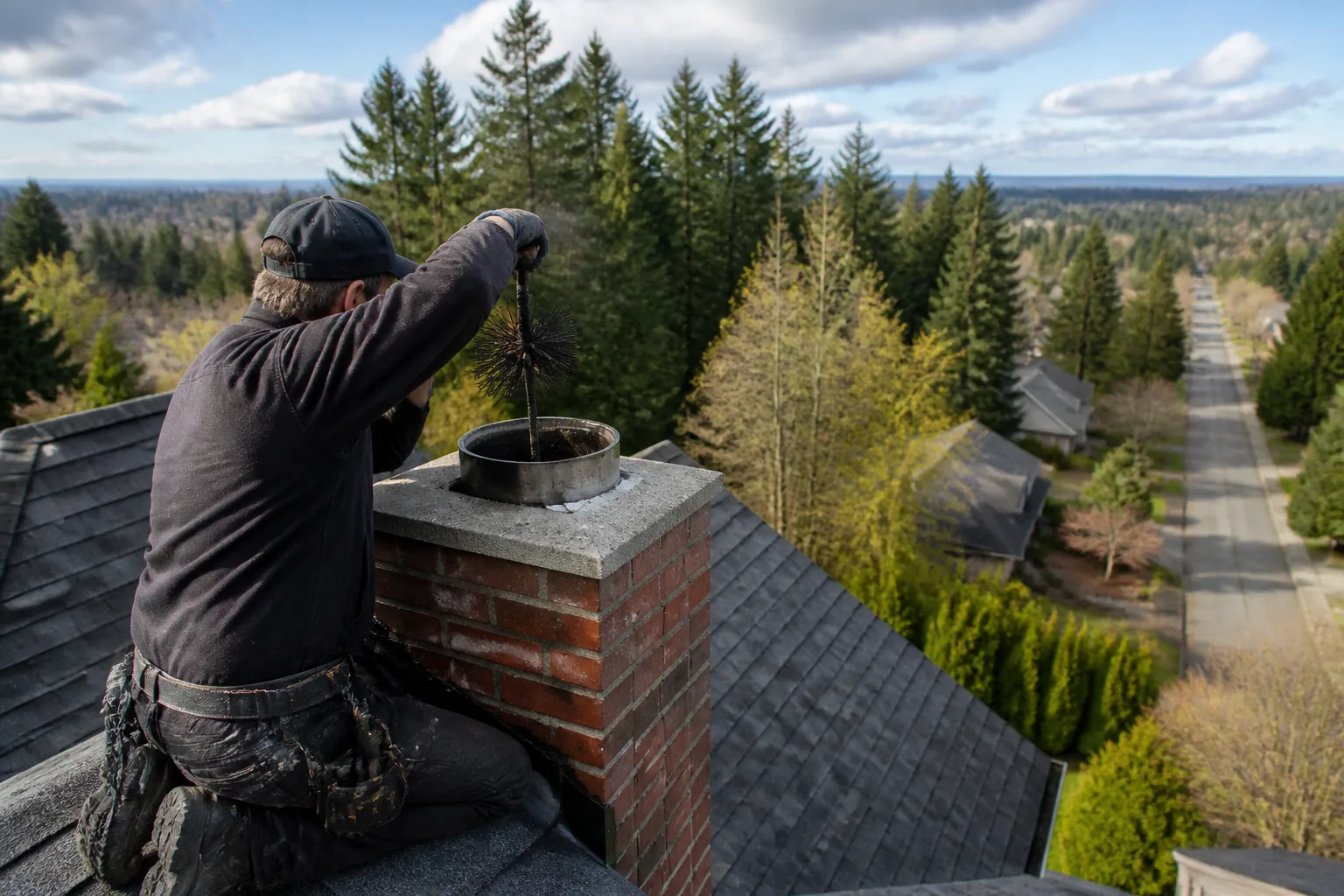
A chimney sweep and inspection is the right call after any fire scare, when you can’t remember the last cleaning, or before the heating season starts. Our technicians have up to 15 years of experience and treat any cleaning as a chance to look at the whole system. Structural problems, a cracked crown, a loose cap, or a damaged liner are a chimney repair conversation. Draft problems and smoke stains are often a fireplace repair issue. And routine upkeep is still the best protection against all of it, so book a chimney sweep before the burning season, not after.
We’ve had our share of homeowner calls that started with “I tried to fix it myself.” We don’t laugh. We just bring the right liner and the right cap.
What happens when you call
- 1
A real person answersNo phone trees – you reach a local pro.
- 2
You get an upfront price rangeHonest numbers before anyone is dispatched.
- 3
A background-checked tech heads outLicensed & insured, dispatched right away.
- 4
You approve before work beginsNothing starts until you say go.
The Bottom Line
Your first 30 seconds after a chimney starts to complain are the most important. Match your situation to one of three: an active fire, smoke or CO in the room, or storm damage. For the first, get out and call the fire department. For the second, get fresh air and treat the alarm as real. For the third, stay off the roof and keep the fireplace out of service. Then call a professional, document everything for insurance, and book the Level 2 inspection before you relight.
We handle the sweep and anything we find. If you’re in South Hill and need help, Chimney Sweep South Hill offers free estimates. Call (877) 792-6671, and estimates are free. Our team works with DuraFlex, HeatShield, Olympia Chimney, and the rest of the professional brands, so the same relationship that cleans your chimney can repair it. For more on the home base page, see Chimney Sweep South Hill.
Frequently Asked Questions
Call the fire department and get everyone out of the house. A roaring or rumbling chimney, glowing stovepipe, or sparks at the top of the flue means a real fire, and it may be spreading into the framing. Do not spray a hose down the flue or climb onto the roof. Once the fire is out, don’t relight until a Level 2 inspection is done. Call (877) 792-6671 for the inspection and a free estimate.
You need the inspection, not just a sweep. A sweep cleans the flue; a Level 2 inspection checks the liner, damper, firebox, and structure for damage the fire may have left behind. Cracks and warped components don’t show up in a sweep. We recommend it after every chimney fire before relighting, and it’s the report your insurance company will ask for.
Usually, yes, if the fire stayed in the firebox, there’s no lingering smoke or CO alarm, and no warm or stained wall around the chase. Leave if any of those are true or you’re unsure. Don’t burn wood in the fireplace until it’s inspected. Call (877) 792-6671 to get it booked and get an exact quote. Estimates are free.
Once a year, and more often if you burn hardwood fires heavily. Creosote builds up in the flue and can ignite, and that’s how most chimney fires start. Skipping it also lets a small crack or a damaged cap go unnoticed. A sweep and inspection each year is cheap insurance compared to a liner replacement. Call (877) 792-6671 for a free estimate on a sweep and inspection.
Written by the team at Chimney Sweep South Hill.
Need Chimney Cleaning Help?
Call Chimney Sweep South Hill - the local pro we connect you with is licensed and insured, here with fast help in South Hill.
(877) 792-6671