
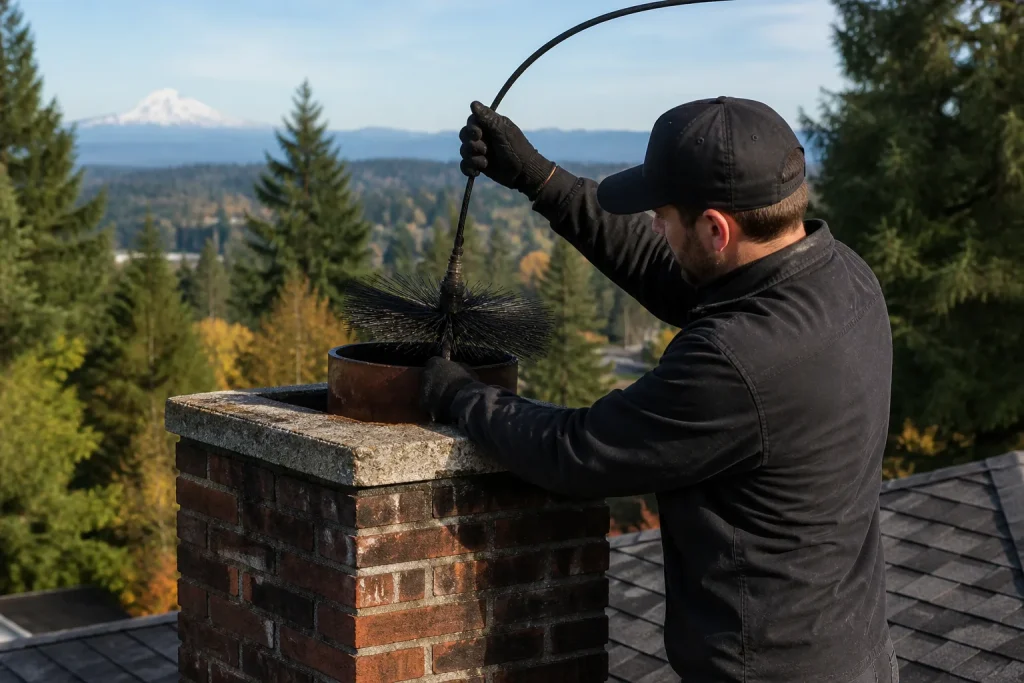
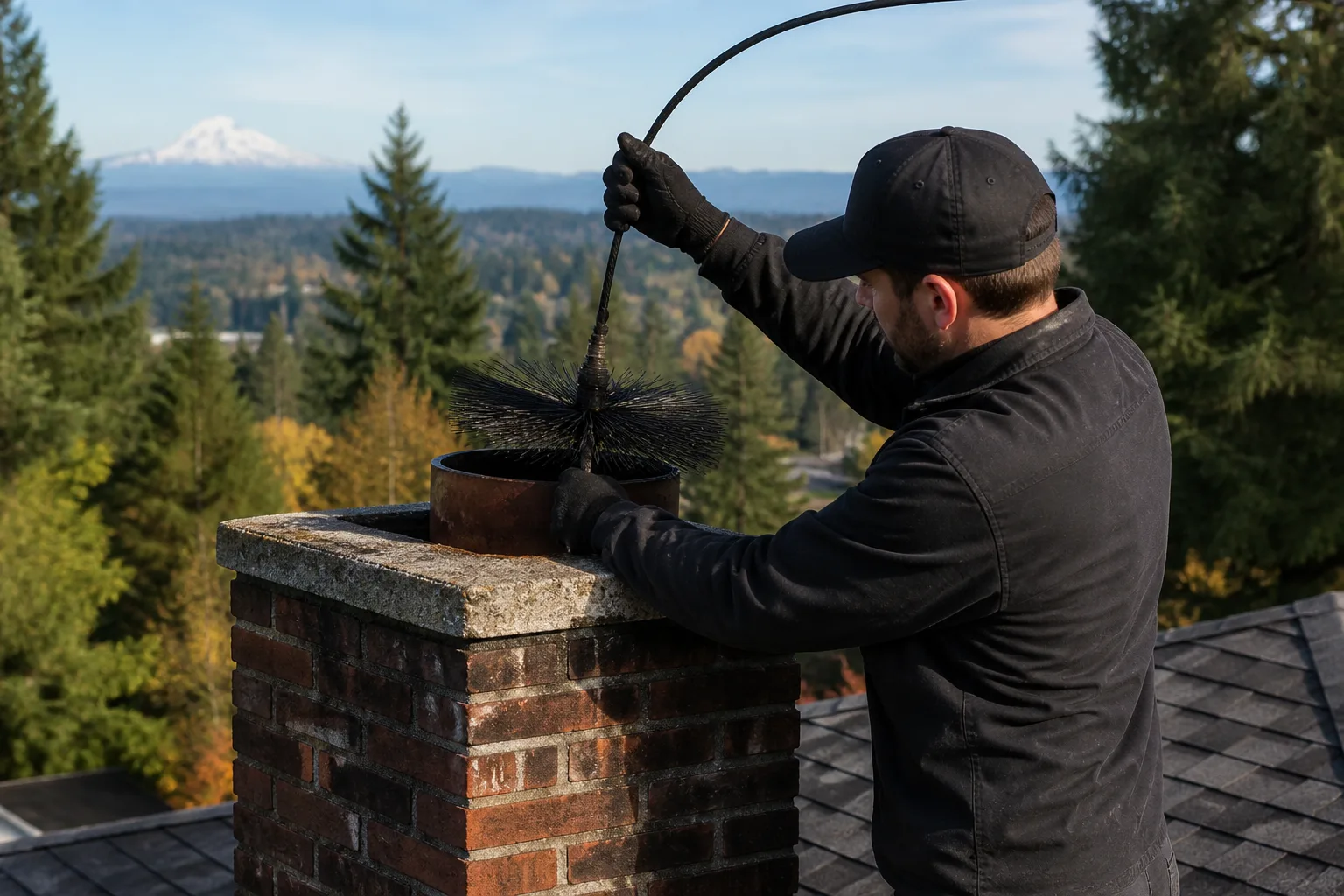
Top Signs You Need Chimney Cleaning Service – Don’t Ignore These
Most homeowners watch for smoke rolling into the room. That’s the sign everyone notices, and it’s actually one of the lower-risk indicators on the list. The signs that come before a chimney fire are quieter: a faint petroleum smell on a cold morning, a thin dark line at the crown, a soft hiss during a burn. We rank the warning signs below by real risk, not by how obvious they are, because catching the subtle ones early is what keeps a cleaning visit from turning into a repair. If you’d rather have a professional look than guess, call (877) 792-6671. We answer 24/7, with fast dispatch from 7am to 7pm, Sunday through Friday.
Why the Obvious Signs Aren’t the Most Dangerous Ones
Smoke backing into the room gets all the attention, but it usually points to a draft problem or a flue that’s simply due for a sweep. It’s uncomfortable and it’s worth fixing, yet it rarely means your chimney system is about to fail. The dangerous signs are the ones you’d have to be paying attention to catch: a change in how the fire smells, a new sound during a burn, a stain that appears slowly over a wet winter.
Here’s the mental model that helps. Think of chimney problems in three tiers:
- Tier 1 – schedule a cleaning soon: smoke smell in the room, a sluggish fire that struggles to draw, soot falling into the firebox, a visible layer of buildup on the flue walls.
- Tier 2 – get it inspected before the season: a faint petroleum or tar odor on cold days, unusual hissing or popping during burns, dark staining at the crown, white crusty deposits on the masonry.
- Tier 3 – stop using the fireplace today: glazed, shiny creosote visible from the firebox opening, crumbling or flaking debris inside the firebox, a cracked or displaced flue tile, water actively tracking down the inside of the chimney.
Most of what you read online lumps all of these together. In our experience as a full-system specialist across South Hill, the tier matters far more than the symptom itself. A Tier 1 sign says book a sweep. A Tier 3 sign says put the fire out and get someone who can see the whole chimney system, not just the flue.
What Glazed Creosote Actually Looks Like (And Why It’s Different)
Glazed creosote is the third and most dangerous stage of creosote buildup. Ordinary creosote looks like soot or a rough black crust. Glazed creosote looks shiny, bubbly, and almost like hardened plastic or tar that’s been poured down the flue wall and cooled. If you shine a light up from the firebox and see a slick, glassy surface instead of a matte black coating, that’s the serious stage.
Why does it matter so much? Because glazed creosote is the fuel that turns a routine chimney fire into a structural one. It’s dense, it burns hot, and it doesn’t brush off with a standard sweep. Standard cleaning removes the loose stages. Glazed creosote usually needs a chemical treatment to break it down before the flue can be properly cleaned.
This is where we do things a little differently than a sweep-only operation. Once the creosote is cleared, we look at what’s underneath it. If the flue liner has been compromised by heat or corrosion, resurfacing with HeatShield lets us restore the liner without tearing it all out. That’s a genuinely cost-conscious path for many chimneys, and it’s a capability most operators simply don’t have in-house. You can see the whole range of what we handle on our chimney sweep page.
Liner Deterioration You Can Spot From the Firebox
You don’t need tools or a ladder to notice early liner trouble. Two signs are visible from the firebox opening, and they’re the ones homeowners most often dismiss.
The first is spalling debris. If you find small flakes, chips, or crumbly pieces collecting on the firebox floor or resting on the smoke shelf after a burn, that’s material coming off the flue interior. It can be a sign the liner is breaking down from heat stress or moisture. That debris isn’t ash, and it’s not something a normal fire produces.
The second is unusual discoloration at the throat. The throat is the area just above the damper. Look for streaks that look like rust, white powdery patches, or dark staining that doesn’t scrub off. Discoloration there can mean moisture is reaching the liner from above or that hot gases are escaping where they shouldn’t.
Neither of these means panic. But both mean you should stop guessing and get a proper look. A documented inspection with photo evidence tells you exactly what you have. That’s the baseline insurance companies and real-estate transactions expect, and it’s the honest place to start before anyone recommends big work. We offer inspections as a standalone service for exactly this reason.
South Hill’s Damp Winters Leave Their Own Warning Signs
South Hill’s wet, marine-influenced winters are hard on a chimney in ways drier climates never see. The moisture doesn’t just sit outside; it works its way into masonry and mortar, and it leaves clues you can read from the yard.
White efflorescence staining is the big one. If you see a chalky white crust on the exterior brick or at the crown, that’s salt being pushed to the surface as moisture moves through the masonry and evaporates. It’s not just cosmetic. Repeated wetting and drying cycles soften mortar and can loosen brick over time.
Mortar soft spots are the follow-on. Press on the mortar joints between bricks and see whether they crumble or feel soft. In a dry climate, that joint might stay firm for years. In South Hill’s damp, it’s the first thing to go.
Here’s the water-protection trio: cap, crown, and liner. The cap keeps rain and animals out of the flue. The crown sheds water off the top of the chimney. And a sound liner keeps moisture from reaching the interior structure. We install caps and crowns with manufacturer-grade components from brands like Copperfield and Gelco, not field-improvised fixes. Protecting those three areas is a far better use of money than repointing a chimney every few winters. For the structural side, see our chimney repair services.
Draft Problems: Dirty Flue vs. Structural Issue
A fireplace that won’t draw is a symptom, not a diagnosis. The fix depends entirely on the cause, and the two causes get treated very differently.
Dirty-flue draft problems are the simpler case. A buildup of soot and creosote narrows the flue, so smoke can’t move up as fast as the fire produces it. Cold air sitting in the flue can also cause a reverse draft on first light. A proper cleaning restores the draw, and you notice the difference the first fire.
Structural draft problems are quieter and more serious. A flue that’s too short, a cracked tile, a missing cap, or a liner that’s separated from the masonry all interfere with airflow. Cleaning won’t fix any of these. In fact, they often get worse over time as the structure shifts.
Why does the distinction matter? Because a homeowner who treats a structural problem as a cleaning problem keeps paying for sweeps that never solve the real issue. That’s the pattern we see most from South Hill homeowners who’ve been passed between providers. We keep the diagnosis and the repair under one roof so you’re not the messenger between two contractors.
A draft problem is a real safety cue, by the way. Poor draw means combustion gases, including carbon monoxide, are more likely to come back into the home instead of up the flue. If your fire ever pushes smoke or an odd smell into the room on a regular basis, treat it as a reason to get the system checked. It’s not something to just live with.
When to Call a Pro
You should call a professional if you see any Tier 3 sign, if you can’t tell which tier a symptom falls into, or if it’s simply been a while since the system was cleaned. Chimney work isn’t the place for guesswork – a lot of it involves heights, heat, and structural judgment. Even inspecting the flue interior properly takes the right light and reaching the right angle.
A simple rule: if the sign would make you hesitate to light a fire, it’s worth a call. Better yet, if you’re planning ahead for the season, a routine sweep and inspection catches these issues before they turn expensive. If you’re in South Hill and aren’t sure what you’re looking at, we can tell you exactly. Our technicians have up to 15 years of experience and will show you what they find before recommending anything.
Related services in South Hill: cleaning and inspection on the chimney sweep page, water damage and structural fixes on chimney repair, and firebox and insert work on fireplace repair. You can also learn more about our full range on the Chimney Sweep South Hill home page.
The Bottom Line
The most important chimney warning signs aren’t the loud ones. They’re the faint petroleum smell on a cold morning, the chalky white staining on the brick after a wet South Hill winter, the flakes on the firebox floor that aren’t ash. Catch these early and a routine cleaning handles it. Ignore the Tier 3 signs and you’re risking more than a costly repair.
If you’re in South Hill and need help, Chimney Sweep South Hill offers free estimates. Call (877) 792-6671. We answer 24/7, with fast dispatch from 7am to 7pm, Sunday through Friday. Someone who knows chimney systems – not just brushes – will look at the whole picture and tell you plainly what needs doing and what can wait.
Frequently Asked Questions
How often should a chimney be swept in South Hill? Once a year for most wood-burning fireplaces is the standard baseline, plus anytime you notice a warning sign from the list above. South Hill’s damp winters make annual inspection worth keeping on schedule, since moisture damage to masonry builds quietly. If you burn frequently, or you’re not sure when the last sweep happened, it’s worth getting it looked at before you light the next fire. Call (877) 792-6671 for a free estimate.
What actually happens if I skip chimney cleaning? Creosote keeps building each season. It moves through stages – from soot to crust to the glazed, tar-like stage that fuels severe chimney fires. A neglected flue can also let moisture and gases attack the liner and masonry over time. The real risk is fire and carbon monoxide infiltration, not just a smoky room. A sweep catches it long before that. Call (877) 792-6671 for a free estimate.
Do I really need a new liner, or can it be repaired? Not every liner needs replacing. Many chimneys can be restored with HeatShield resurfacing, which addresses deterioration without a full tear-out. The only honest way to know is a proper inspection with photo evidence you can see for yourself. We won’t recommend liner work without showing you why. If it can wait, we’ll say so. Call (877) 792-6671 for a free estimate.
Can a dirty flue cause a draft problem that looks structural? Yes, and that’s why the two get confused. A flue narrowed by buildup can mimic a structural draft failure. A cleaning usually resolves the dirty-flue kind right away. If draft problems continue after a sweep, that points to something structural – a short flue, a cracked tile, or a compromised liner – which needs repair, not more sweeping. An inspection tells you which. Call (877) 792-6671 for a free estimate.
Written by the team at Chimney Sweep South Hill.
Need Chimney Cleaning Help?
Call Chimney Sweep South Hill - the local pro we connect you with is licensed and insured, here with fast help in South Hill.
(877) 792-6671