
Last updated November 25, 2026
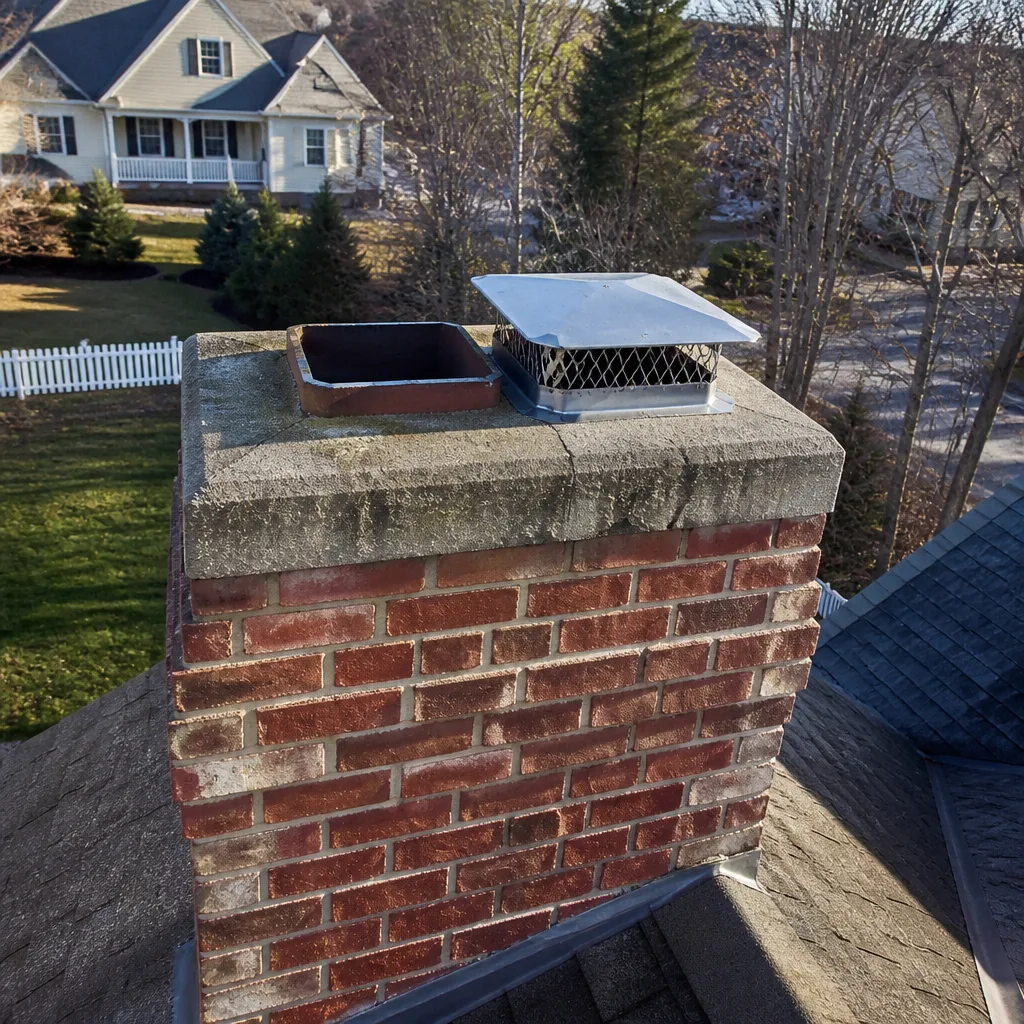 Sweep & inspection
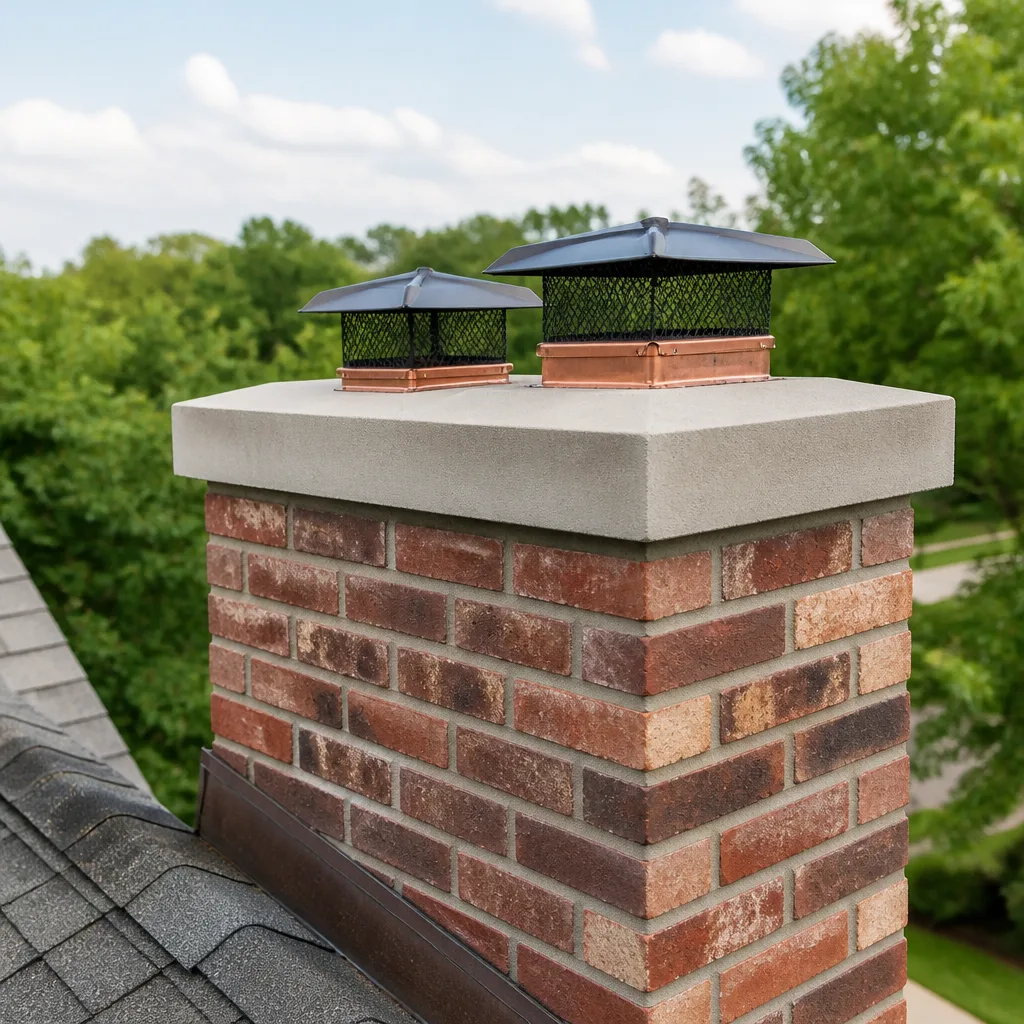 Caps & crowns
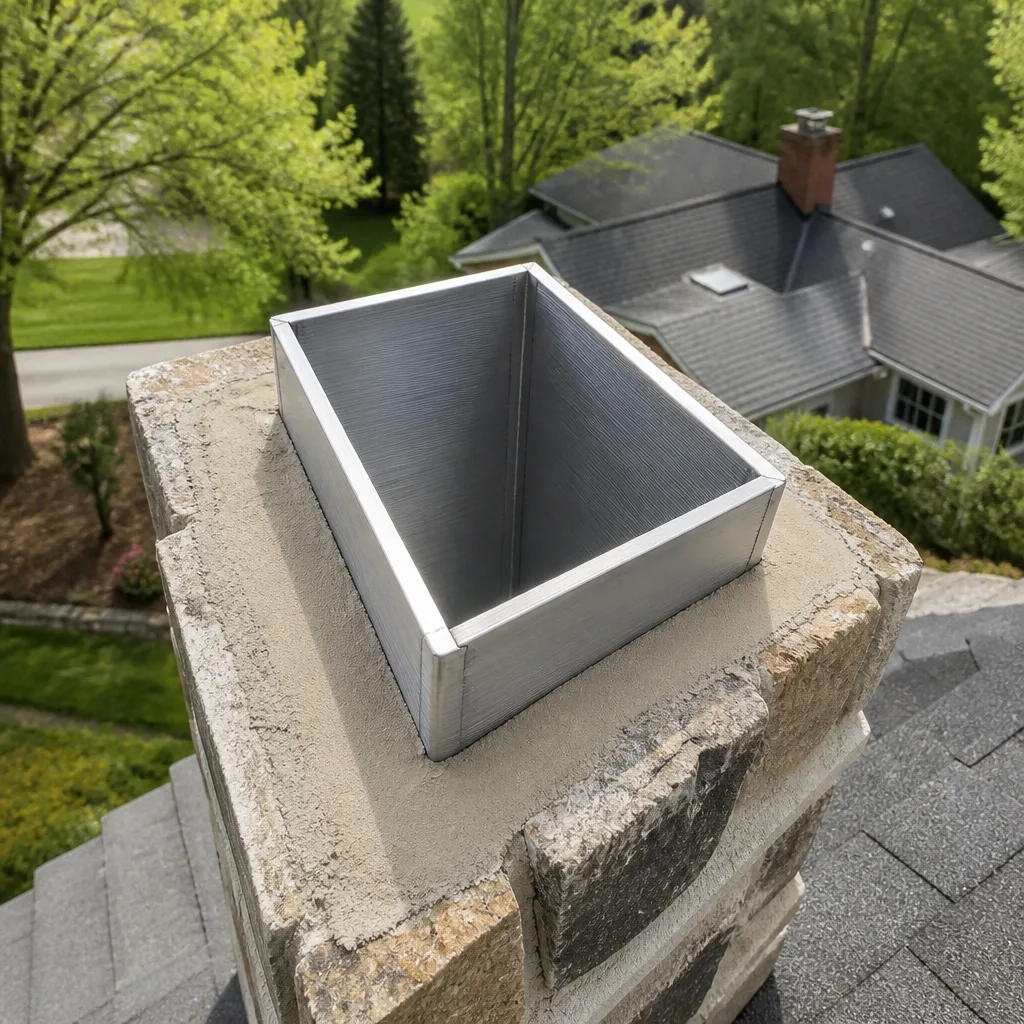 Flue relining
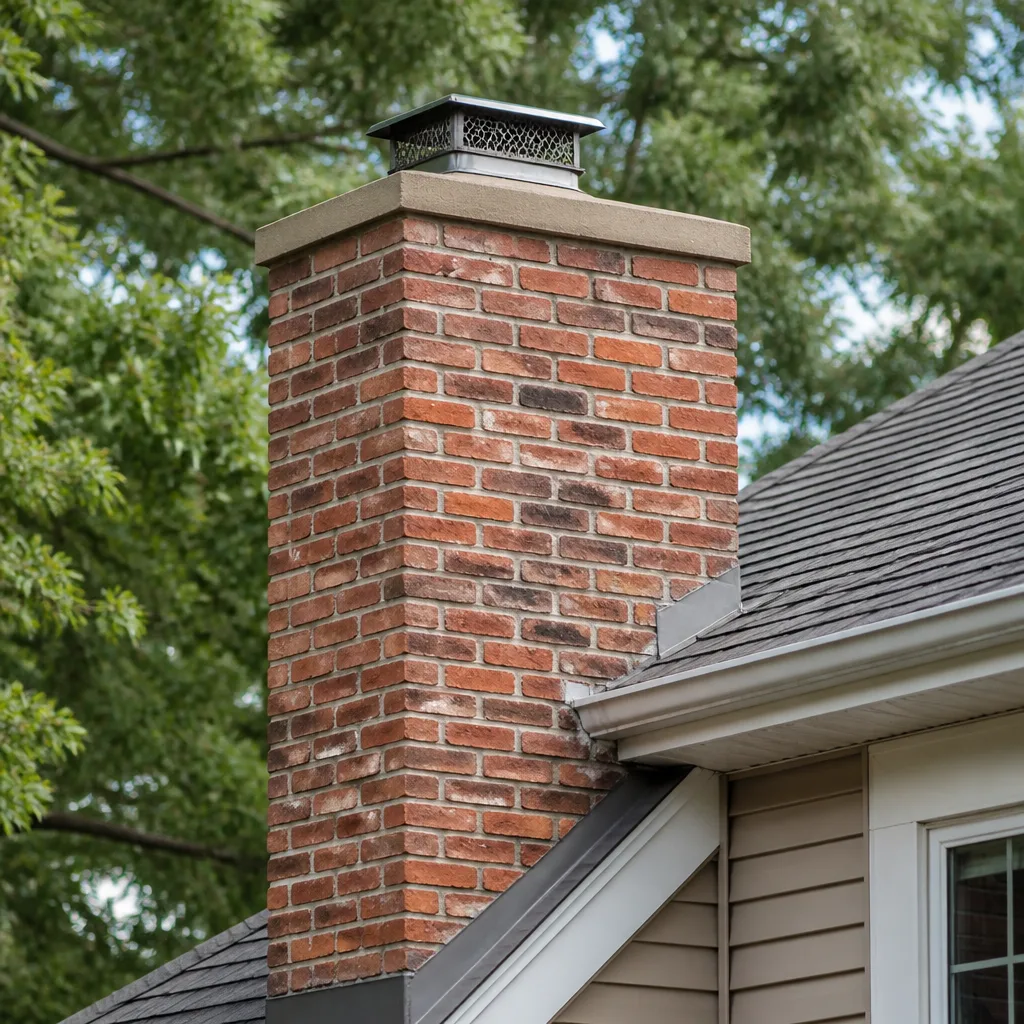 Masonry repair
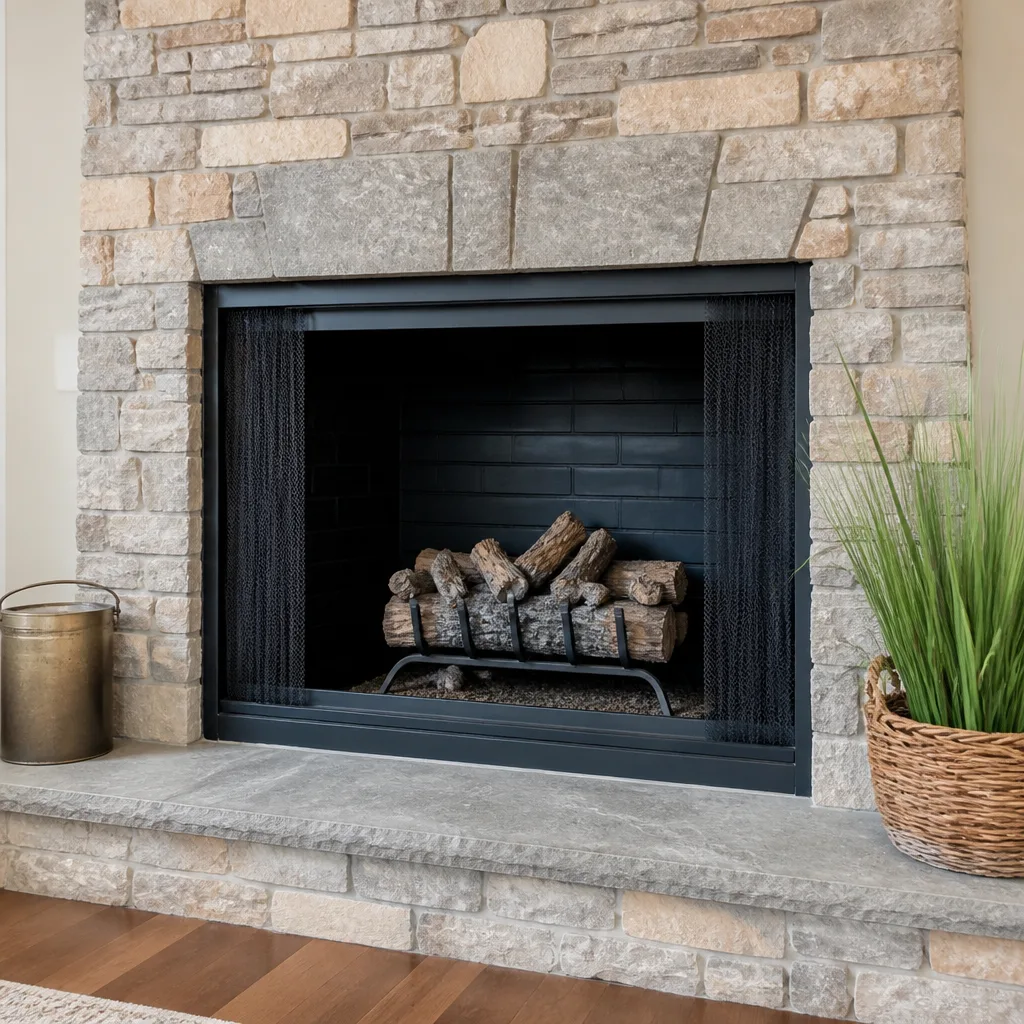 Gas fireplace service
Level 1 sweep and inspection to the NFPA 211 annual standard - flue, crown, cap, and flashing checked and photographed
Chimney sweep logs do not sweep chimneys. They loosen some creosote - which then falls where a brush and vacuum still have to collect it.
Chimney Sweep Maintenance Schedule: What to Do and When
The industry standard you’ll hear repeated everywhere – “sweep at least once a year” – was written for average use. If you burned fifty or more fires last heating season, you may have already crossed the threshold for a mid-season inspection without knowing it. That gap between the generic rule and your actual burning habits is where chimney problems hide. A real maintenance schedule isn’t a single appointment circled on a calendar. It’s a year-round rhythm built around your wood, your burn frequency, and the wet Pacific Northwest winters that define life in South Hill. This guide walks you through that calendar month by month, explains how to calculate your own creosote risk, and shows you which upkeep tasks belong in your hands and which require professional tools and access.
Quick Answer
A complete chimney maintenance schedule for South Hill includes one annual professional sweep and full-system inspection (ideally in spring or early summer), a pre-season check each September before you light the first fire, and a mid-season inspection around the one-cord mark if you burn heavily. Between professional visits, you check the cap for debris, watch the crown for cracks, and keep an eye out for moisture stains. Spring is the best time to address water damage, because summer humidity makes efflorescence and rust harder to treat.
Styles & brands we work with
- Sweep & inspection
- Caps & crowns
- Flue relining
- Masonry repair
- Gas fireplace service
Table of Contents
- The South Hill Month-by-Month Maintenance Calendar
- How to Calculate Your Actual Creosote Accumulation Rate
- The September Pre-Season Checklist: Beyond the Flue
- Why Spring Is the Right Time to Address Moisture Damage
- Mid-Season Checkpoints for Heavy Burners: The 1/8-Inch Rule
- DIY Maintenance vs. Tasks That Require Professional Access
- The Three Types of Inspection and When Each Applies
The South Hill Month-by-Month Maintenance Calendar
Chimney maintenance in South Hill doesn’t follow the same curve as it does in Arizona or even Eastern Washington. Our wet winters mean wood gets delivered damp, fires burn cooler at start-up, and creosote deposits form differently than they do in dry climates. Here’s how the year breaks down when you’re burning wood in South Hill.
January – February: Peak burn season. Watch for draft problems, smoke rollback, and any change in the smell of your fireplace. If you’re burning more than a cord, note the date. It’s your signal to check for mid-season buildup.
March – April: Burn season winds down. This is when you schedule your annual sweep and inspection – before summer, when chimney companies fill up. Spring is also the time to address any moisture damage the wet winter exposed.
May – June: Ideal weather for repair work. If your inspection flagged a cracked crown, damaged flashing, or a liner that needs attention, schedule it now. Warm, dry conditions make installation and curing easier.
July – August: Quiet season. This is the window for larger projects: cap replacement, crown rebuilds, liner resurfacing. HeatShield work and other repair services proceed without the urgency of a heating deadline.
September: Pre-season inspection. Before you light that first fire, have the system checked end to end. This is the second most important inspection on the calendar.
October – December: Burn season begins. If you started the year with a clean sweep in spring, you’re set. If you didn’t, this is when buildup starts compounding.
Why this matters: South Hill sits at the edge of the Puyallup valley, where temperature inversions trap cool air and slow wood smoke dispersal. Fires tend to burn slower here in winter, and slow burns produce more creosote than hot, fast fires. A spring sweep catches what accumulated over the winter; a September check catches what built up over summer drying and any storm damage to the cap.
We’ve seen a lot of homeowners treat the annual sweep as the whole schedule. It isn’t. If you want a real appointment on the calendar, book your chimney sweep for spring and your inspection for September, and use the months in between for the smaller maintenance tasks covered below.
How to Calculate Your Actual Creosote Accumulation Rate
Creosote doesn’t accumulate on a fixed timeline. It accumulates at a rate determined by four factors: what you burn, how much you burn, how hot the fire burns, and how well the chimney drafts. That’s why two households in South Hill can sweep once a year with no issue, and another can build dangerous deposits in a single season.
Here’s the calculation method we recommend to any South Hill homeowner who wants a realistic picture of their own risk profile.
- Count your fires. The month-by-month tally from last season is your starting point. Under 30 fires is light use. 30 – 60 is moderate. Over 60, or over one full cord of wood, is heavy use.
- Identify your wood type. Seasoned hardwood (oak, maple, alder dried at least six months) burns hot and clean, producing less creosote. Softwood, unseasoned wood, and any wood that hisses when you touch it to the fire will produce creosote aggressively. Most South Hill wood deliveries in wet months arrive above ideal moisture content – assume less-than-perfect wood unless you’ve tested it with a moisture meter.
- Watch your flue temperature. The rule of thumb: fires consistently hot produce less creosote. Fires tended to burn slow and low, especially overnight or with a damper closed too far, produce the most. If you like a slow overnight burn, your creosote rate is higher than your fire count suggests.
- Check your draft. A short chimney, a blocked cap, or a chimney on the downwind side of the house with strong trees nearby will draft poorly. Poor draft means cooler flue gases and faster creosote buildup.
- Apply the rule. If you burn 60 or more fires, or over one cord, or you favor slow overnight burns, plan for a mid-season inspection. That’s the single best baseline anyone can give you without seeing the flue.
When we sweep a South Hill chimney, we show you the creosote we removed. That’s the most accurate creosote calculator available – your own chimney’s actual behavior. Store that knowledge and use it to plan next season.
The September Pre-Season Checklist: Beyond the Flue
Most homeowners think of “chimney inspection” as a camera run up the flue. That’s the flue sweep, and it matters – but a real full-system inspection covers every part of the chimney that can fail or cause a problem. September is the right month for this because you catch issues before the first cold snap, not during it.
Here’s what a complete pre-season inspection should cover:
- Crown: The concrete top surface of the chimney. Cracks and spalling let water in, and the water freezes and expands in winter, making the damage worse. Any crown showing more than hairline cracks should be evaluated for repair or replacement.
- Cap: The metal or concrete hood overhanging the flue. It keeps rain, snow, birds, and squirrels out. A missing or damaged cap is one of the most common causes of water intrusion in South Hill chimneys. We install and repair caps using manufacturer-grade components from Gelco, Olympia Chimney, and Copperfield – not improvised sheet metal.
- Flashing: The metal seal between the chimney and the roofline. Lifted or rusted flashing is a common source of slow roof leaks that show up as ceiling stains over time.
- Damper: The metal plate above the firebox that opens and closes the flue. A stuck or rusted damper means poor control over your burn and draft.
- Firebox: The brick or refractory panels inside the fireplace. Cracked masonry allows heat to reach wood framing behind the walls.
- Liner: The flue lining itself. Metal or clay liners degrade over time, and a compromised liner allows heat and gases to reach the home’s structure. This is where a professional with a camera sees what matter more than any visual inspection from inside the firebox.
If you’re considering a full-service chimney repair for anything this checklist turns up, September leaves you enough time to get the work scheduled before winter. In our experience, the busy booking window starts in October, and by November anyone needing repairs is waiting – or postponing – which is the worst outcome for a system you rely on all winter.
Why Spring Is the Right Time to Address Moisture Damage
Chimney water damage doesn’t sit still. It gets worse in a self-reinforcing loop: water enters through a crack, soaks into masonry, freezes and expands during winter, opens the crack wider, and admits more water the following season. South Hill sees plenty of wet winters and occasional deep freezes, which is exactly the combination that accelerates this cycle.
Here’s what makes spring the right season for addressing it:
- Efflorescence is visible. That white, chalky staining on exterior brick is crystallized salt pushed to the surface by water passing through the masonry. It’s most obvious in spring, after the wet season, which is when we can trace the source. By midsummer, summer humidity and general weathering blur the evidence.
- Repairs cure reliably. Crown rebuilds, flashing repair, and cap replacement all work better when temperatures stay above 50°F and the work can dry without immediate rain. April through June gives you that window in South Hill.
- You’re not racing the heating season. A crown repair done in May has time to be evaluated and adjusted before you need the chimney again.
- Efflorescence locks in by summer. Once summer humidity sets, the crystallized salt and the underlying moisture pathway become harder to trace. Spring evaluation makes the diagnosis faster and more reliable.
We handle fireplace repair and chimney repair as part of the same relationship, so a sweep in April that reveals efflorescence becomes a scheduled crown repair rather than a referral. If you’re looking at water staining, rust in the firebox, or that white powdery bloom on your chimney’s south or west face – the two exposures that catch the most weather in South Hill – spring is the season to address it.
Mid-Season Checkpoints for Heavy Burners: The 1/8-Inch Rule
The 1/8-inch rule is the single most practical number in chimney maintenance: when creosote buildup on the flue interior reaches one-eighth of an inch, it’s time to clean. That’s not one-eighth of an inch of “charcoal dust” or ash – it’s the sticky, glazed layer that comes from slow, cool fires. You can’t see it from inside the firebox. But you can infer its presence by tracking how much you’ve burned.
Here’s how to use the rule in a Southeast Puget Sound climate like South Hill’s.
- At the one-cord mark or roughly 60 fires, schedule a mid-season inspection. Not a full sweep necessarily – a professional can look, gauge the buildup, and tell you whether it’s 1/16 inch (monitor) or 1/8 inch (sweep now).
- Pay attention to changes in performance. A chimney that drafted well in November but is slow-roaring smoke back into the room in January is signaling buildup. Don’t ignore the change.
- Check the cap from the ground. Snow, ice, and nesting birds can block the cap. A blocked cap produces poor draft, which produces more creosote – a bad feedback loop.
- Schedule the next sweep in March or April. Whatever wasn’t cleaned at the mid-season checkpoint gets swept in spring as part of your annual service.
We can’t stress enough that the 1/8-inch rule is a real safety threshold, not a scheduling courtesy. Creosote in the glazed stage is what fuels chimney fires, and the hotter the fire, the more it compounds. If you’ve been burning daily since October, don’t wait for spring. Have the flue looked at.
If you’re curious how much buildup you started the season with, a mid-season inspection from the team at Chimney Sweep South Hill is a simple way to find out.
DIY Maintenance vs. Tasks That Require Professional Access
A lot of chimney maintenance really does belong to the homeowner. Plenty of it doesn’t. Here’s the line, and why it matters for anyone in South Hill who wants to stay engaged with their chimney’s upkeep without taking on tasks that can hurt them or damage the system.
Safe to do yourself:
- Clearing debris off the chimney cap from the ground with a long-handled tool – if you can reach it from a stable, low position. Never climb the roof for this.
- Checking the crown visually from the ground with binoculars. Cracks and missing chunks are visible with magnification, especially from an angle that gets side light.
- Watching for interior signs of a problem: smoke rollback into the room, water stains on the ceiling near the chase, rust or white deposits on the fireplace surround, or a fire that won’t draft.
- Testing your smoke and carbon monoxide detectors monthly. This is the single most valuable maintenance task in any home with a wood-burning appliance, and it’s one hundred percent in your hands.
- Keeping the area around the fireplace clear of combustible items and sweeping up ash on a regular basis.
Requires professional access and tools:
- Sweeping the flue. This requires brushes matched to your liner type, extension rods, proper working access to the flue from the roof or firebox, and the ability to handle the mess. It also requires someone who can distinguish creosote stage 1 (brushable), stage 2 (harder, needs specific brushes), and stage 3 (glazed, needs chemical treatment or aggressive mechanical removal).
- Any inspection at or above Level 2, which requires a chimney camera run through the flue.
- Crown repair, cap installation, flashing work, and damper replacement.
- Diagnosing liner problems. A damaged liner may call for resurfacing with HeatShield – an alternative to full liner replacement for qualifying chimneys – or a new liner from DuraFlex or Olympia Chimney.
- Any work on the roof. Steep roof angles, wet shingles, and fall risk make roof-access chimney work one of the most dangerous homeowner projects there is.
Safety caveat: Never attempt to inspect or sweep a flue you can’t safely reach, and never burn a fire in a chimney with a suspected liner crack. If you’re unsure, stop and have a professional look.
The Three Types of Inspection and When Each Applies
Chimney inspections aren’t one thing. The industry recognizes three levels, and knowing which one you need keeps you from paying for more than necessary – or less than required.
Level 1 Inspection: A visual check of the accessible portions of the chimney – the firebox, damper, visible flue, cap, crown, and flashing – without special tools. This is what you’d have alongside an annual sweep when nothing has changed with the system. It’s the baseline check for routine maintenance.
Level 2 Inspection: Everything in a Level 1, plus a camera run through the full flue. This is the inspection required for a real estate transaction, after a chimney fire, after an event that could have damaged the chimney (earthquake, severe storm), or when switching fuel type. It’s also the sensible choice when you first move into a home whose chimney history you don’t know.
Level 3 Inspection: The most involved inspection, which may include removing parts of the chimney structure to access concealed areas. It’s reserved for cases where a serious hazard is suspected but can’t be confirmed visually – a known chimney fire, a major structural event, or a hidden defect.
For a South Hill homeowner rotating through normal maintenance, Level 1 is usually enough, paired with the annual sweep. For buyers and sellers closing on a home in South Hill, a documented Level 2 inspection with a photo report is the standard. We provide inspection documentation that meets what lenders, insurers, and real estate transactions require. Inspections are a standalone service with us – not an upsell to a sweep – which makes them useful for anyone who simply wants to know what condition their chimney is in.
Common Mistakes to Avoid
- Treating the annual sweep as the entire schedule. A sweep is a floor, not a ceiling. Skip the September check, skip the mid-season inspection for heavy burners, and you’re missing the two checkpoints that catch problems before they compound.
- Scheduling the sweep in November. The busiest month in South Hill for chimney work is November, and the wait is real. Spring sweepers never wait. November sweepers sometimes miss the first fire.
- Ignoring efflorescence. That white chalky stain on the outside brick isn’t cosmetic. It’s your chimney telling you water is passing through the masonry, and it will only get more expensive to resolve each winter it goes unaddressed.
- Burning unseasoned wood because it’s what showed up. Wood delivered in wet weather to a South Hill drop-off is often above 20% moisture content even when the seller says it’s seasoned. A moisture meter costs less than a cord of wood and prevents a whole season of accelerated creosote buildup.
- Skipping the mid-season check because the sweep was recent. A sweep in September doesn’t cover a chimney that then burned 80 fires through January. The 1/8-inch rule exists because buildup is a function of use, not of the last appointment date.
- Hiring a sweep-only crew for repair needs. If the sweep reveals a crown problem, a damaged cap, or a compromised liner, a sweep-only contractor has to refer you out. We handle the sweep and anything we find – including liner resurfacing with HeatShield when a full liner replacement isn’t required.
- Ignoring the cap because it “looks fine” from inside. Caps fail slowly. From the window it looks intact; from above, the mesh has corroded through. Visual checks from the ground with binoculars catch more than a quick glance from the living room.
See the difference
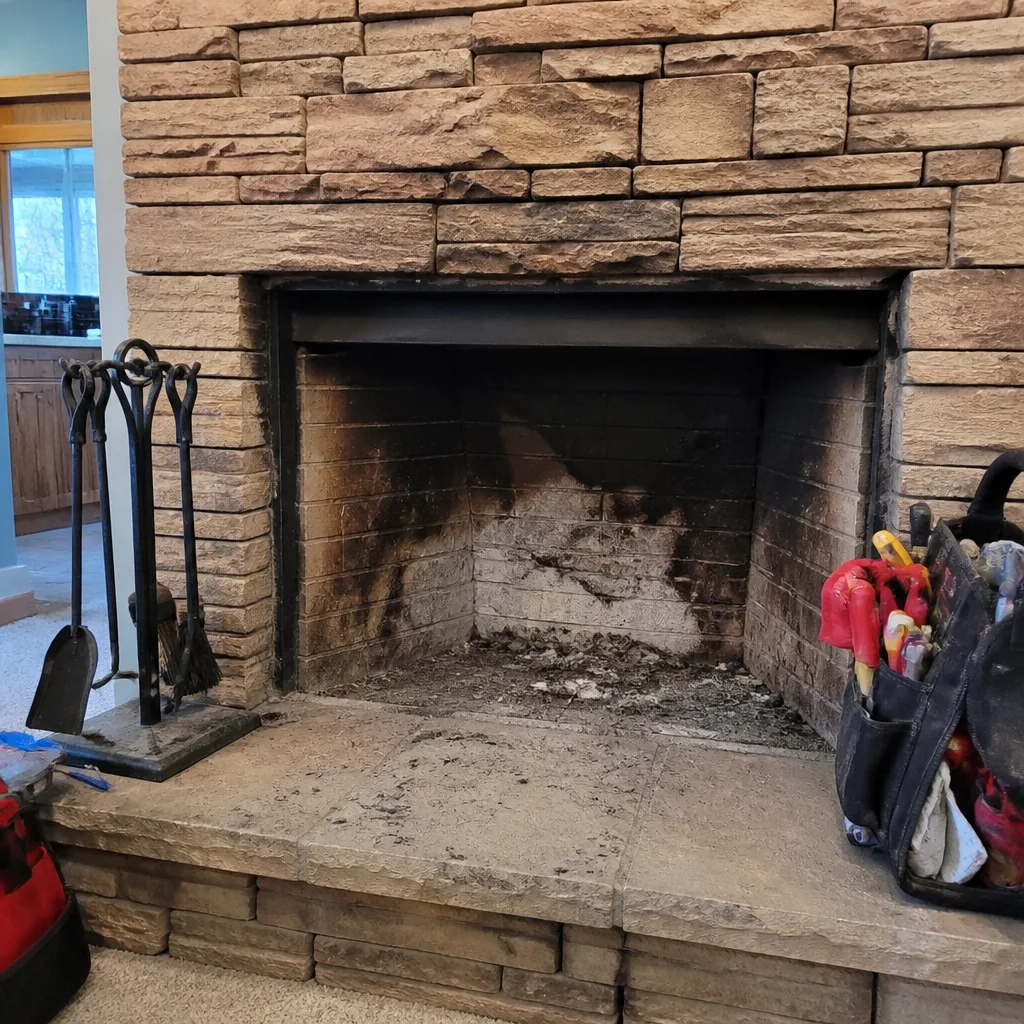 Before
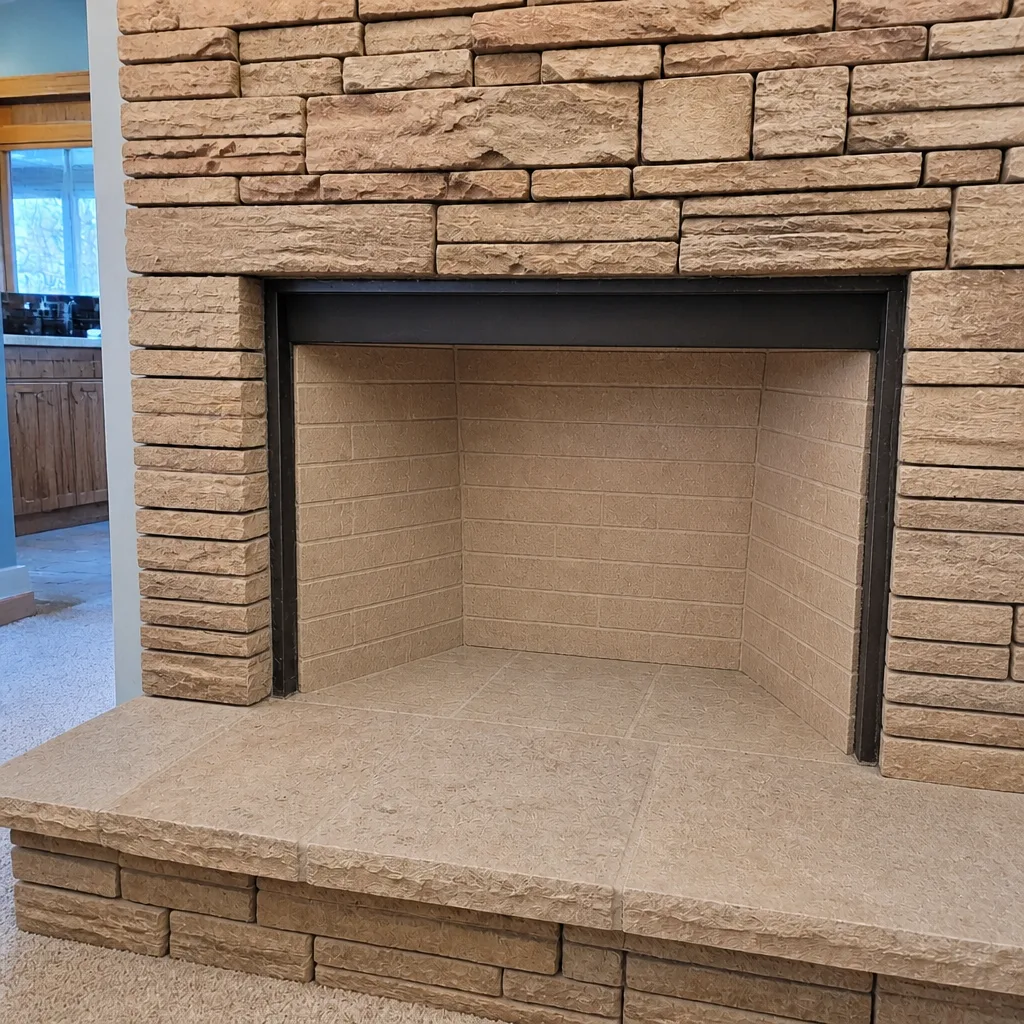 After
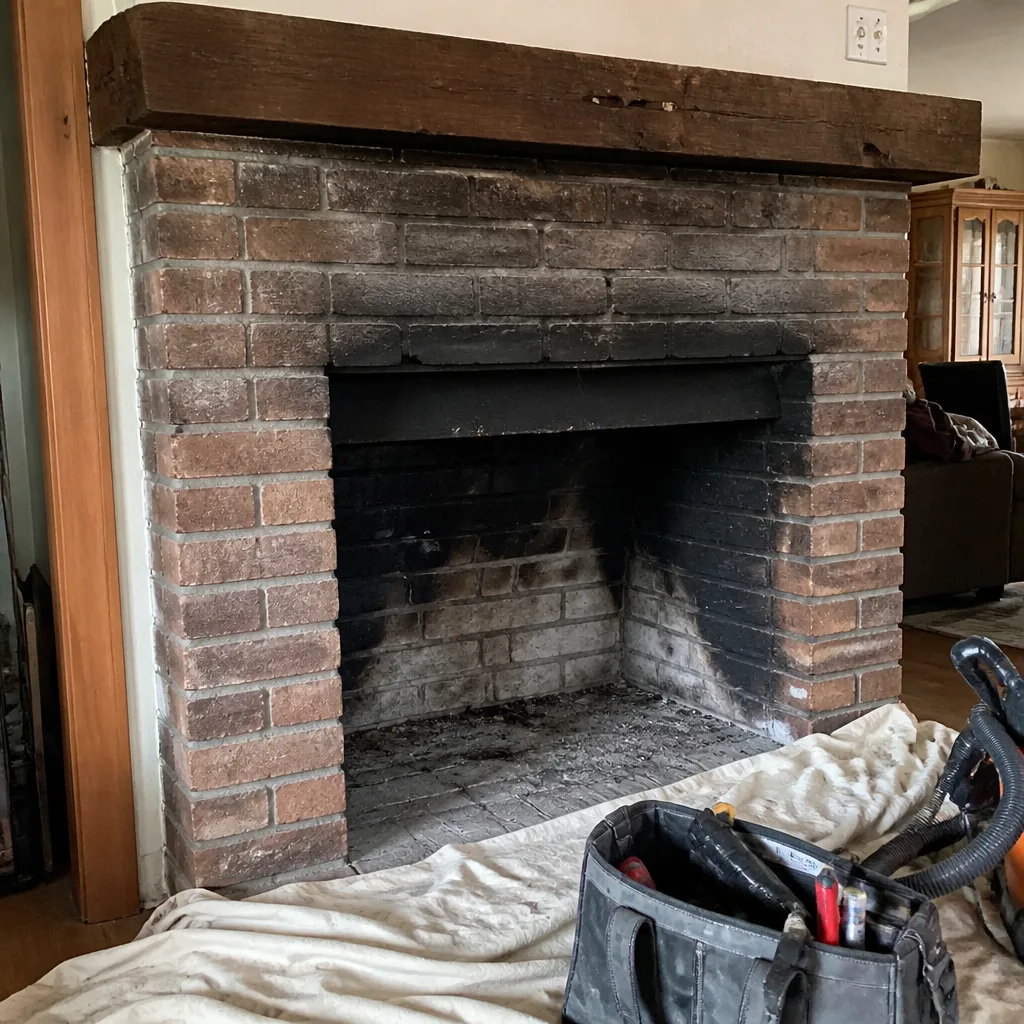 Before
 After
 Before
 After
When to Call a Professional
Call a professional chimney technician when any of these situations applies:
- You’ve burned 60 or more fires or a full cord since your last sweep.
- You notice smoke rolling back into the room when the fireplace is operating.
- You see water staining on the ceiling near the chimney chase or on the inside of the fireplace.
- You spot white efflorescence on the exterior chimney masonry.
- You’re buying or selling a home in South Hill and need a documented Level 2 inspection for the transaction.
- Your crown has visible cracks, or the cap is missing, damaged, or blocked.
- You’ve never had the chimney inspected and don’t know its history.
- Anything has changed in a way that might have affected the chimney – a chimney fire, a severe storm, or a change in fuel.
Chimney Sweep South Hill offers free estimates in South Hill – call (877) 792-6671. We answer 24/7. Fast dispatch from 7am to 7pm, Sunday through Friday.
Frequently Asked Questions
Sweep once a year at minimum, in spring, and add a mid-season inspection if you burn 60 or more fires or over a cord of wood per season. South Hill’s damp winters and tendency toward slow overnight burns push many households over the “average use” assumption that the once-a-year rule was built around. If you heat primarily with wood, err on the side of more frequent visits. Call (877) 792-6671 for an exact schedule recommendation based on your burning habits.
The 1/8-inch rule says that when creosote buildup inside the flue reaches one-eighth of an inch, the chimney needs cleaning. That threshold is where creosote becomes fuel for a chimney fire rather than a manageable deposit. You can’t measure it from inside the firebox, so it’s a professional check. If you’re a heavy burner near the mid-season mark, call (877) 792-6671 to schedule a check.
You can maintain your chimney, but sweeping the flue safely requires professional tools, proper roof or firebox access, and the ability to identify which creosote stage you’re dealing with. Most homeowners in South Hill shouldn’t do it themselves – roof access is the risk, and misidentifying glazed creosote can lead to damage. Call (877) 792-6671 and we’ll sweep it and tell you what we find.
Spring catch problems early, gives repair work warm, dry weather to cure, and beats the November booking rush that hits every chimney company in South Hill. It also puts you in the best position to evaluate moisture damage – efflorescence from the wet winter is most visible in spring, before summer humidity blurs the evidence. Call (877) 792-6671 to book a spring sweep.
Yes, in certain cases. A Level 2 inspection – the camera-based one – is required after a chimney fire, after any event that may have damaged the chimney, when switching fuel type, or when you first move into a home with an unknown chimney history. For routine annual maintenance with no changes, a Level 1 visual inspection alongside the sweep is usually sufficient. Call (877) 792-6671 and we’ll tell you which level fits your situation.
A sweep removes creosote and debris from the flue; an inspection evaluates the condition of the chimney system. They’re often performed together, but they’re not the same service. At Chimney Sweep South Hill, inspections are a standalone offering, which matters if you need one for a real estate transaction or an insurance requirement without a sweep. Call (877) 792-6671 to schedule either or both.
The Bottom Line
A chimney maintenance schedule in South Hill isn’t a single annual appointment. It’s a spring sweep, a September pre-season check, a mid-season look at the 1/8-inch mark for heavy burners, and a set of small homeowner tasks in between. Track your burn count each season, use the 1/8-inch rule to time your mid-season inspection, and always address moisture damage in spring – before summer humidity makes efflorescence and rust harder to trace. The two most common points of water intrusion on any chimney are the cap and the crown, so watch both. And remember: a sweep-only crew can only point you at problems. A full-service specialist can fix what the sweep reveals. Call (877) 792-6671 for a free estimate and we’ll build your schedule from your actual burning habits.
Written by the team at Chimney Sweep South Hill.