
Last updated November 25, 2026
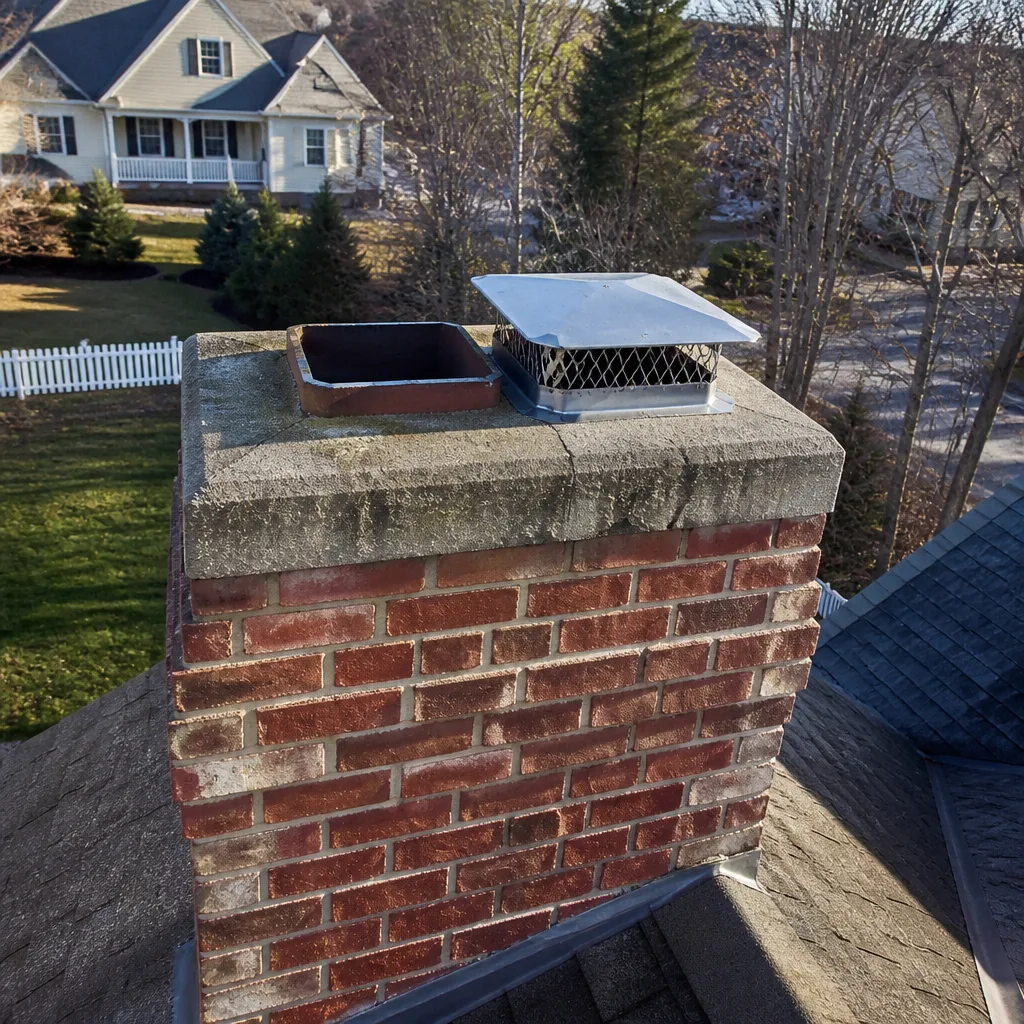 Sweep & inspection
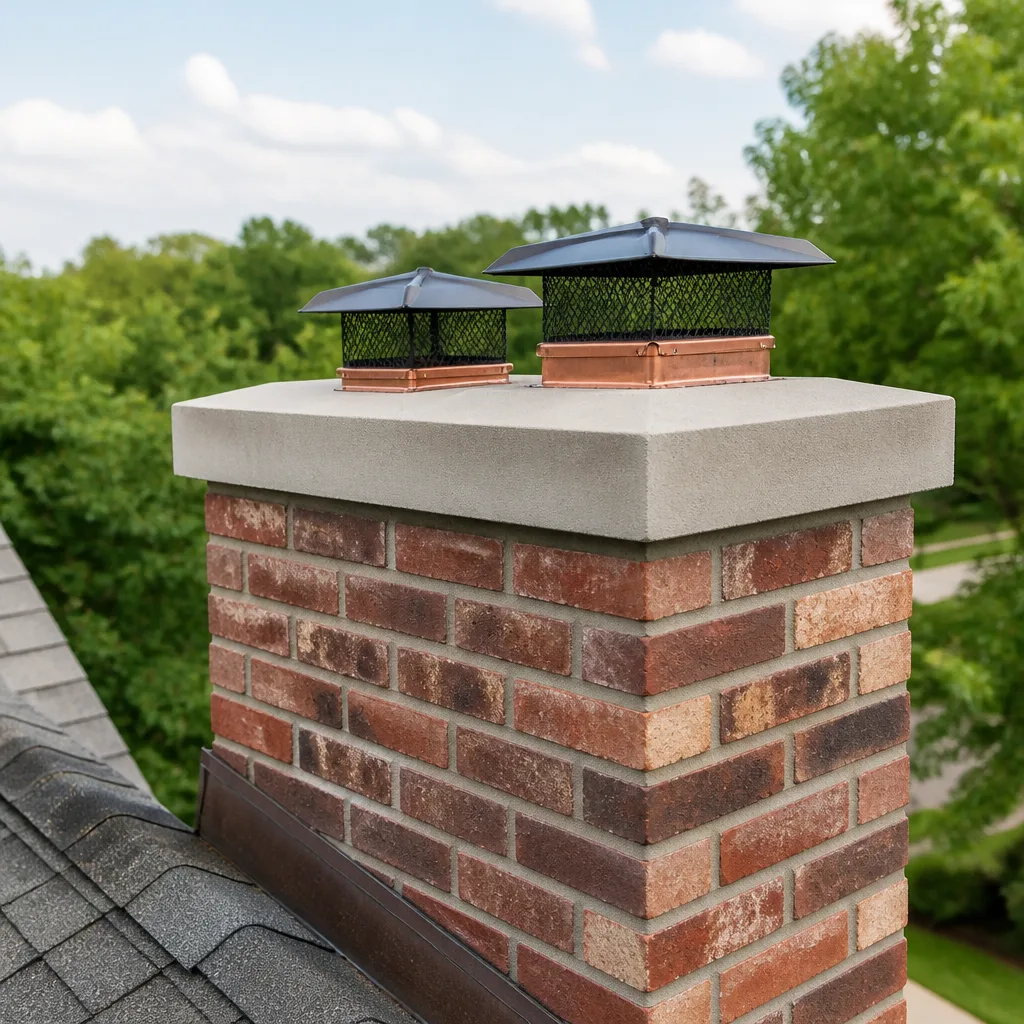 Caps & crowns
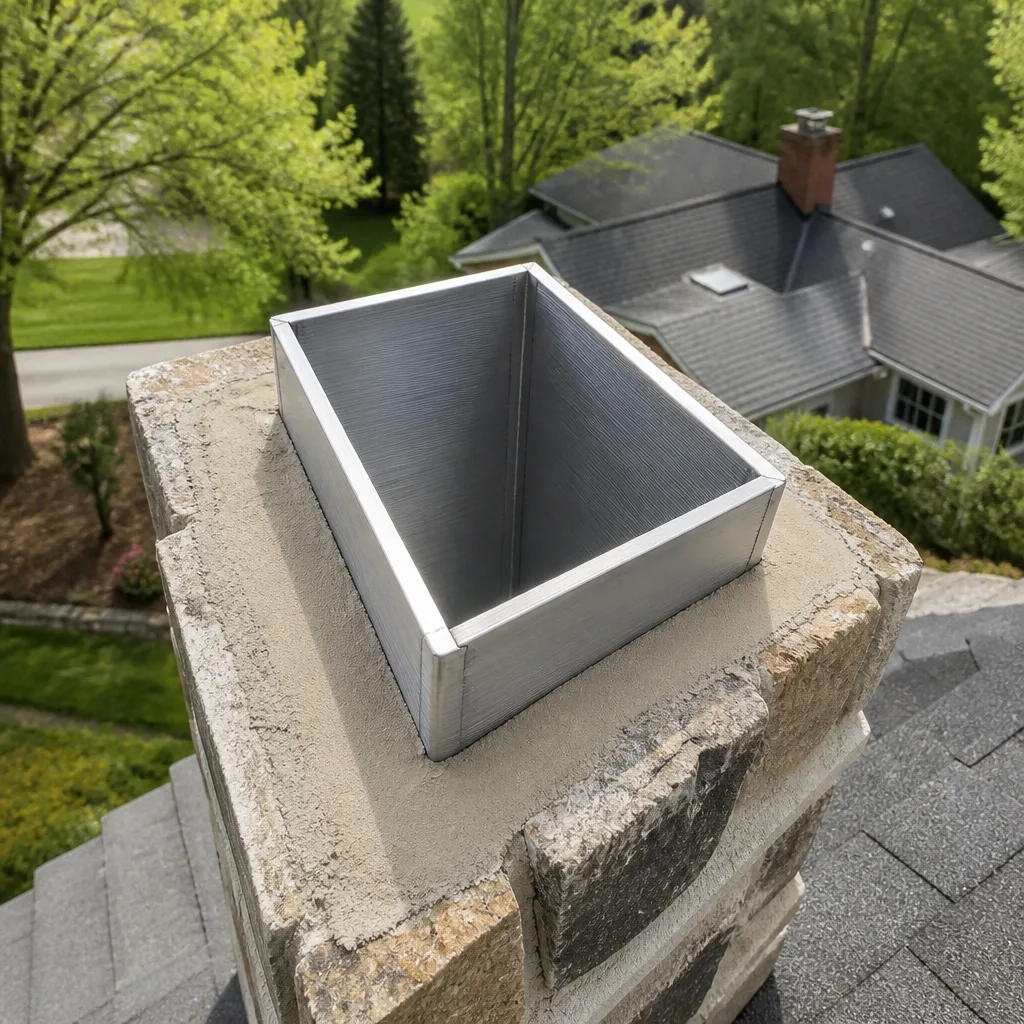 Flue relining
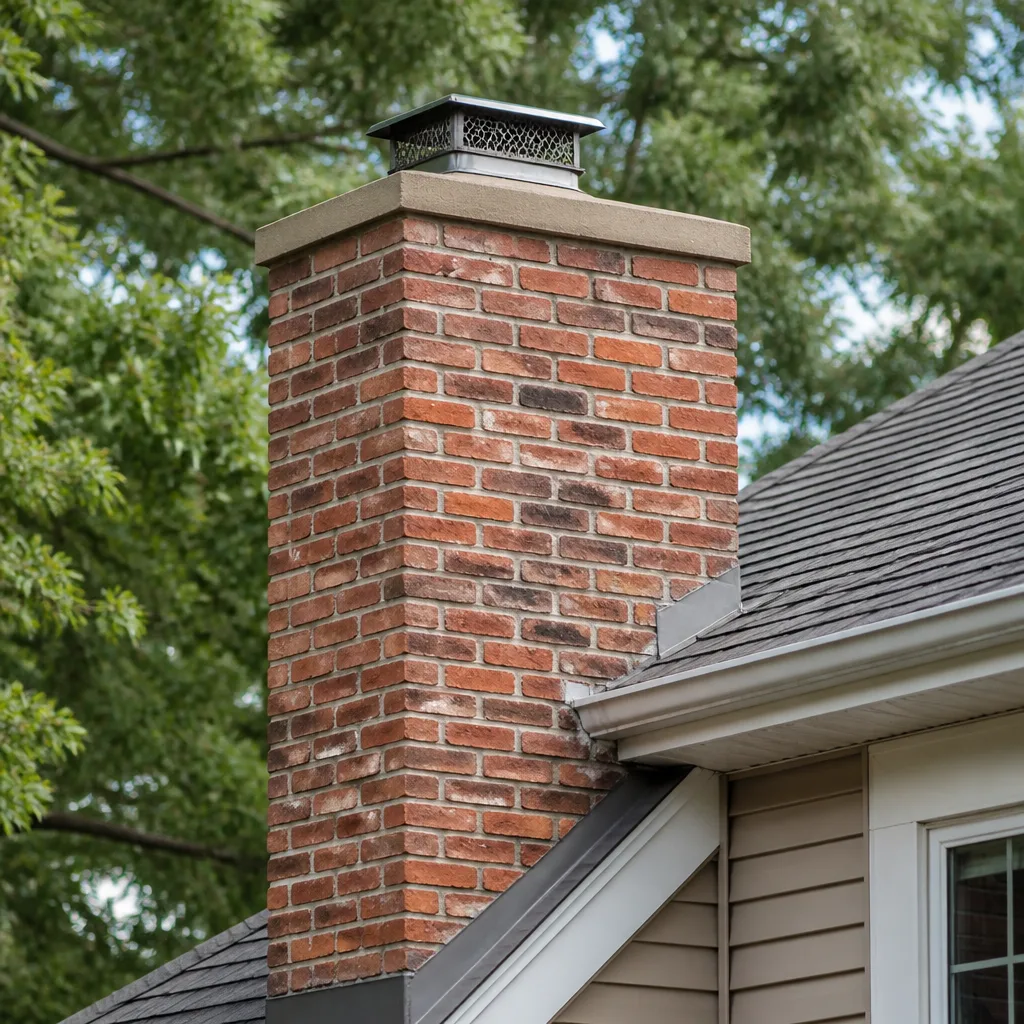 Masonry repair
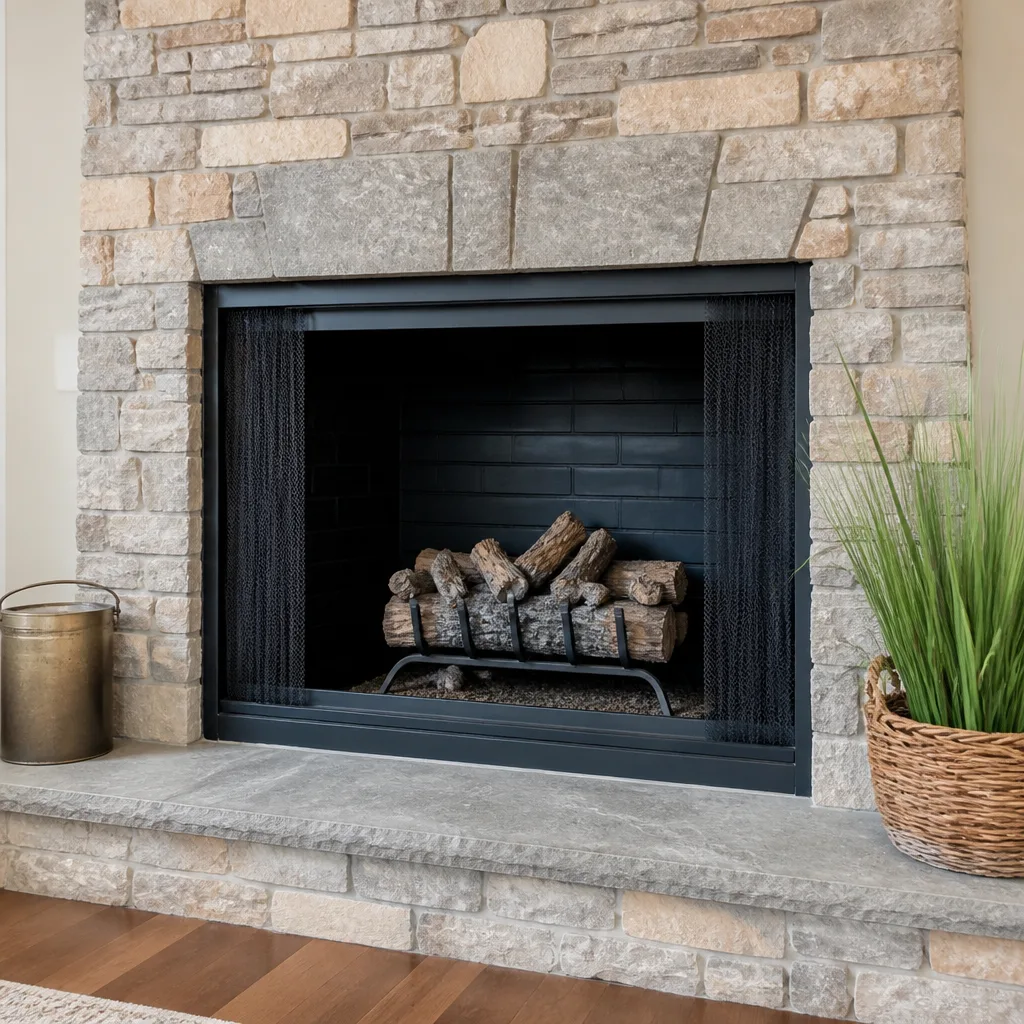 Gas fireplace service
Level 1 sweep and inspection to the NFPA 211 annual standard - flue, crown, cap, and flashing checked and photographed
Chimney sweep logs do not sweep chimneys. They loosen some creosote - which then falls where a brush and vacuum still have to collect it.
Choosing the Right Chimney Cleaning Brand: A Buyer’s Guide for South Hill
When a contractor proposes a chimney relining, they’re making a materials decision that will affect your home for thirty years. Most homeowners approve that decision without ever knowing whether the liner is a professional-grade DuraFlex system or an import with no UL listing at all. That gap in knowledge is where money quietly gets spent on the wrong system, or the right system installed the wrong way. This guide is written for South Hill homeowners who want to evaluate a chimney proposal instead of simply signing it. We’ll cover what the major brands are actually engineered to do, how to tell a genuine parts-and-install relationship from a phone call to a warehouse, and the questions that separate a specialist from a sweep-only operator. By the end you’ll understand your chimney system well enough to ask real questions and read a real answer.
Quick Answer
The right chimney cleaning and repair brand in South Hill is the one whose components are UL-listed, rated for your appliance and fuel type, and installed to the manufacturer’s written specification by the company that sells them. In practice that means professional-grade systems from names like DuraFlex, HeatShield, and Olympia Chimney, not generic hardware-store parts. A brand only protects you when the installer is held to the manufacturer’s installation requirements, so the brand and the labor are a single decision, not two.
Styles & brands we work with
- Sweep & inspection
- Caps & crowns
- Flue relining
- Masonry repair
- Gas fireplace service
Table of Contents
- Why the Brand Behind Your Chimney System Matters More Than You Think
- What DuraFlex Stainless Liner Systems Are Engineered For
- HeatShield Ceramic Resurfacing: What It Repairs and What It Can’t
- Olympia Chimney and Top-Side Components: Caps, Dampers, and Chase Covers
- How to Verify a Contractor Actually Stocks and Installs These Brands
- The Questions to Ask About Warranties, UL Listings, and Installation Requirements
- What South Hill Conditions Mean for Chimney Materials
Why the Brand Behind Your Chimney System Matters More Than You Think
Chimney work splits into two halves, and homeowners usually only think about one of them. The first half is labor: the sweep, the inspection, the diagnosis. The second half is materials: the liner, the cap, the crown, the damper. A proposal can look perfectly reasonable on paper and still put a component in your flue that wasn’t engineered for the job. When the same company handles both halves, the brand decision stops being invisible.
Here’s what makes the material side different from most home repairs. A chimney liner is not a commodity part. It works in continuous contact with combustion byproducts, thermal cycling, and in South Hill’s wet winters, moisture that finds its way down an unprotected flue. A liner rated for natural gas is not automatically suitable for a wood-burning insert. A flexible liner engineered for an offset flue is a different product from a rigid section. Generic parts blur those distinctions. Professional-grade brands publish them.
A full-system chimney specialist works from a curated roster: DuraFlex, HeatShield, Gelco, Olympia Chimney, Famco, and Copperfield. That roster does two things at once. It gives the technician a correct component for the specific job, and it gives you a paper trail you can verify. A sweep-only operator who calls in a third party for anything structural never develops that material knowledge, which is why their proposals stay vague on product specifics.
What you get from a company that owns both halves is continuity. We handle the sweep and anything we find, and if the inspection turns up a failed flue tile or a cracked crown, the same relationship carries through to the repair. There’s no handoff, no second round of quotes, no gap where the diagnosis and the materials decision get made by different people who never talk to each other.
If you’re just starting out with annual maintenance, the routine chimney sweep is where material questions begin, because that’s the visit where a technician first sees what’s inside your flue.
What DuraFlex Stainless Liner Systems Are Engineered For
DuraFlex is a stainless steel liner system, and the word “system” matters. It’s not a single product off a shelf; it’s a family of components engineered to work together, with published ratings that tell you exactly where each one belongs. When a contractor proposes a DuraFlex liner, they should be able to tell you which variant and why.
Three engineering points drive the choice:
- Flexibility for offset flues. Many South Hill homes have chimneys that don’t run in a straight line from the firebox to the top. A masonry chase may shift a few inches mid-run to clear a framing member. Flexible liner is engineered to negotiate that offset without cutting and coupling, which keeps the flue as a continuous path and reduces joints that can fail.
- Temperature rating. A wood-burning appliance produces higher flue gas temperatures than a gas appliance, and the liner has to be rated for that service. This is where the alloy grade matters. Higher nickel-content stainless holds up better to the acidic condensate that forms when a wood fire cools, which is a real factor in humid climates, because creosote and moisture together accelerate corrosion.
- Fuel-specific alloy selection. A liner rated for a wood stove is not the same specification as one rated for a high-efficiency gas appliance. Gas appliances produce more water vapor in the exhaust, and the condensate is acidic. Choosing the alloy for the fuel is not a premium upsell. It’s the difference between a liner that lasts and one that pits and fails.
Alloy grade is also where the market gets murky. A cheap import liner and a DuraFlex liner can look identical in a photograph. The difference is the alloy specification, the UL listing, and whether the installer followed the manufacturer’s requirements for insulation, support, and termination. You can’t see any of that from the outside of the chimney once the job is done.
The other reason a professional system matters is that liner choice has to match the rest of your system. If a wood insert is installed into a flue that was sized for an open fireplace, the liner has to be correctly sized for the appliance’s draft requirements. Undersized, the stove smokes. Oversized, the flue stays cool and creosote builds faster. The brand publishes the sizing. The installer has to read it.
If a liner has already failed and you’re pricing options, our chimney repair page covers how relining fits into the broader repair picture.
HeatShield Ceramic Resurfacing: What It Repairs and What It Can’t
HeatShield is a ceramic resurfacing compound applied to the inside of a clay flue. It’s one of the more interesting tools in the trade, and one of the most misunderstood. Done right, it can restore a flue that would otherwise need a full liner tear-out. Done wrong, or applied to a chimney it can’t help, it’s money that buys a false sense of security.
What HeatShield actually repairs
It’s designed for flues where the clay tile is still structurally sound but the surface has degraded. That covers a few specific conditions:
- Porous clay tile that has absorbed moisture and is spalling at the surface
- Hairline cracks in the tile joints, where the mortar has deteriorated but the tile is intact
- Rough interior surfaces that catch creosote and make sweeping harder
- Minor gaps between tile sections that pose a path for heat, smoke, or carbon monoxide
The compound is troweled or sprayed onto the flue interior and cured to form a smooth ceramic barrier that restores a continuous lining.
What it cannot replace
HeatShield is not a liner. If the clay tile has separated, if whole sections are missing, if the flue has shifted out of alignment, or if the existing liner has completely failed, resurfacing cannot fix it. Those cases need a full reline with a stainless system like DuraFlex. The critical question is whether the clay tile is structurally intact, and that answer comes from the camera, not from a glance up the flue.
How to tell when resurfacing is the right call
The decision comes down to the camera inspection. A technician runs a camera up the flue and reviews the footage with you. If the tile is intact and the problem is surface-level, HeatShield is a cost-conscious solution that avoids a full tear-out. If the footage shows structural failure, resurfacing isn’t on the table. The footage should be something you see, not something you’re told about. That’s the single biggest difference between a proposal you can trust and one you can’t verify.
Olympia Chimney and Top-Side Components: Caps, Dampers, and Chase Covers
Most chimney conversations focus on what’s inside the flue. But the two most common points of water intrusion are on top, at the cap and the crown. Olympus Chimney and brands like Famco and Copperfield make the professional-grade components that protect that end of the system, and the difference between professional and box-store is often measurable in years of service.
What professional-grade top-side components cover:
- Chimney caps. A cap keeps rain, snow, birds, and debris out of the flue while allowing exhaust to escape. A professional-grade cap is sized to the flue opening and constructed from corrosion-resistant material, with a screen sized to keep out animals and embers. A generic cap that doesn’t fit properly leaves gaps and does the opposite of its job.
- Top-sealing dampers. A top-sealing damper sits at the top of the flue rather than in the firebox, which makes the seal more reliable and eliminates the cold draft that comes down an open flue overnight. It’s an Olympia product line that professional-grade brands lead on because the seal design is the whole product.
- Chase covers. Homes with a framed chimney chase that has siding or a metal cap over it need a chase cover, not just a cap, because the top of the chase is flat and collects water. A professional cover is fabricated to the actual dimensions of the chase, not adapted from a stock size.
- Crown materials. The crown is the concrete or masonry cap that sheds water off the top of the chimney. A cracked Crown is the most common path for water to get into the chimney structure. Professional-grade crown materials and correct fabrication methods make the difference between a crown that lasts decades and one that cracks in a few winters.
Why professional-grade lasts longer: the material itself is thicker, the fasteners are stainless, and the manufactured fit is precise. A box-store cap designed to approximate a size leaves a gap, and that gap lets in the water and animals the cap was supposed to keep out. In a wet climate like South Hill’s, a small gap at the top of the chimney is a slow road to a saturated flue.
Thinking in terms of cap, crown, and liner together is what moves the conversation from “cleaning day” to long-term protection. If you’ve had a water stain on the ceiling or the fireplace surround, our fireplace repair page covers what that kind of damage looks like and how it’s addressed.
How to Verify a Contractor Actually Stocks and Installs These Brands
Any contractor can say they work with DuraFlex or Olympia Chimney. Verifying the claim is mostly about asking specific questions and watching whether the answers stay specific. Here’s how to sort it out in about ten minutes.
- Ask which specific product fits your application before the proposal is written. A specialist can name the liner family and explain why it fits your flue and fuel type. “We’ll use a stainless liner” is not an answer; “a DuraFlex flexible liner sized for your wood insert and the offset at the second course” is.
- Ask to see the manufacturer’s instructions and installation requirements for the product proposed. Every professional-grade brand publishes them. A contractor with real product knowledge can produce them and will point to what’s involved.
- Ask how they handle the liner insulation. Insulation is required for many applications, and skipping it is one of the most common shortcuts. A specialist talks about it without being prompted.
- Ask what happens if a product is discontinued or unavailable. A company that works from a curated roster can name an alternative from a brand with the same ratings. A company sourcing whatever’s cheapest that week will say something vague.
- Ask whether they’ll install components they don’t sell. A true specialist has a specific answer, often a polite no, because the warranty and installation requirements travel with the brand.
- Ask for the inspection report with footage. This one applies regardless of brand. Reputable inspections are documented and delivered, and the footage should be something you can look at yourself.
What you’re looking for as a pattern is specificity. A specialist who stocks and installs professional-grade brands will talk about product categories, ratings, and installation steps without hesitation. A generalist who calls in third parties will speak in generalities, and the proposal will shift toward something on the shelf at the moment of the job. When a proposal shows a professional-grade brand correctly matched to your appliance, you’re looking at the right process. When it shows a brand you’ve never heard of with no UL-listing documentation, ask why.
The Questions to Ask About Warranties, UL Listings, and Installation Requirements
A good product installed incorrectly voids its own warranty. That sentence is the entire reason this section exists. You can buy the best liner on the market and lose the protection of the warranty on the day it’s installed if the installation requires insulation and the installer skipped it. Here are the questions to ask, in order.
About UL listing
Ask whether the product is UL-listed, and for which application. A UL listing is specific to a fuel type and an appliance category, not a blanket approval. A liner rated for natural gas isn’t automatically rated for a wood insert, and the listing reflects that. Ask to see the listing documentation. It’s not a demanding request; it’s a normal one.
About the warranty
Ask what the manufacturer’s warranty covers and what conditions it requires. Professional-grade brands tie their warranty to the installation. Common conditions include correct insulation, correct termination, and installation by a qualified installer. Ask whether the warranty covers the product only or the installation too, and get the warranty documentation in writing with the proposal.
About installation requirements
Ask what the manufacturer’s installation requirements are for the product proposed and whether the proposal accounts for them. Key items to verify:
- Whether liner insulation is specified, and at what thickness
- What the top termination is, and whether it matches the cap or damper being installed
- How the liner is supported and whether support is specified at the top, the bottom, or both
- Whether the appliance’s flue-gas temperature falls within the liner’s rated range
About the inspection that justifies the product
Ask what the inspection found that makes this product the answer. The camera footage should show it. If a proposal for a reline can’t point to a specific condition in the footage, ask what problem the reline is solving. The inspection shouldn’t be a sales tool propped up in front of the real work; it’s the evidence the work is based on.
About accountability after the install
Ask who takes responsibility if something fails. With a company that handles both the materials and the labor, the answer is one name. With a handoff situation, the answer can turn into a loop. That’s why a single-company accountability model from diagnosis through repair matters more than the product brand on its own.
If you’re hiring for a real estate transaction, the inspection is where these questions get answered in writing. Sellers, buyers, and homeowners who want a documented safety baseline can get a standalone inspection that meets the standard insurance companies and real-estate transactions expect. Start from Chimney Sweep South Hill to see the full range of what we handle.
What South Hill Conditions Mean for Chimney Materials
Material choices that make sense in a dry climate don’t automatically make sense in South Hill. The Pacific Northwest’s wet season runs for months, and that has direct consequences for chimney components.
Moisture is the primary driver. Rain finds a cracked crown, a loose cap, or a missing chase cover, and it runs down the interior of the flue. Wet flue tile absorbs water, weakens, and spalls. Wet creosote becomes acidic. A stainless liner sitting under that moisture in a flue that stays cool between fires is at risk of corrosion over the long term, which is why alloy grade and fuel-specific selection matter here in a way they don’t in a drier place. This isn’t an emergency in October; it’s the slow-accumulation problem that a five-year-old cap replacement quietly prevents.
The other consequence is temperature cycling. Wet, mild winters with occasional cold snaps mean the flue cycles through expansion and contraction many more times per year than in a stable cold climate. Flexible liner systems like DuraFlex are engineered to handle that movement. Rigid joints that aren’t properly insulated will show the strain sooner. Same with crowns: a crown fabricated from correctly mixed concrete with a proper overhang sheds water, while a thin mortar skim on top of the chase will crack within a couple of winters.
These are the same reasons we lean on professional-grade component brands. The Olympia Chimney caps and chase covers we install are engineered for an actual fit, not an approximate one. The HeatShield resurfacing option means a South Hill homeowner whose clay tile is intact but spalling, which is common in a wet climate, has a real alternative to a full liner tear-out. The DuraFlex liner comes in the alloy grades that the fuel-specific rating requires.
If what you actually need is a routine maintenance visit, that’s the place to begin, and the rest follows from what we find: a professional chimney inspection is the first step whether you’re seeing a problem or want a baseline.
Common Mistakes to Avoid
- Approving a liner without knowing its alloy grade and fuel rating. The proposal has to name the product family and the alloy. If it doesn’t, the wrong liner can be installed and you’d never know until the flue fails.
- Assuming a box-store cap will do the job. A cap that doesn’t fit the flue opening leaves a gap that invites water and animals. Professional-grade caps are sized to the flue, and the difference shows within a few winters in South Hill’s wet season.
- Letting resurfacing be applied to a flue it can’t fix. HeatShield is a good product for porous or spalled but structurally intact tile. If the tile has separated or failed, resurfacing is a false fix. The camera footage is what tells the difference.
- Trusting a proposal that names a brand but not the installation requirements. Every professional-grade brand ties its warranty to how the product is installed. Product plus labor is the decision, not the product alone.
- Skipping liner insulation because the proposal didn’t mention it. Insulation is a manufacturer requirement for many applications. It’s also what keeps the flue gas temperature in the liner’s rated range. If it’s not in the proposal, ask why.
- Letting inspection footage be a sales tool instead of evidence. The footage should show the condition that justifies the work. A technician who describes the problem but doesn’t show it is asking you to approve work you can’t verify.
- Waiting until the wet season to have the cap and crown checked. Water intrusion damage accumulates quietly over months. Checking the two most common intrusion points before the wet season is preventative, not reactive.
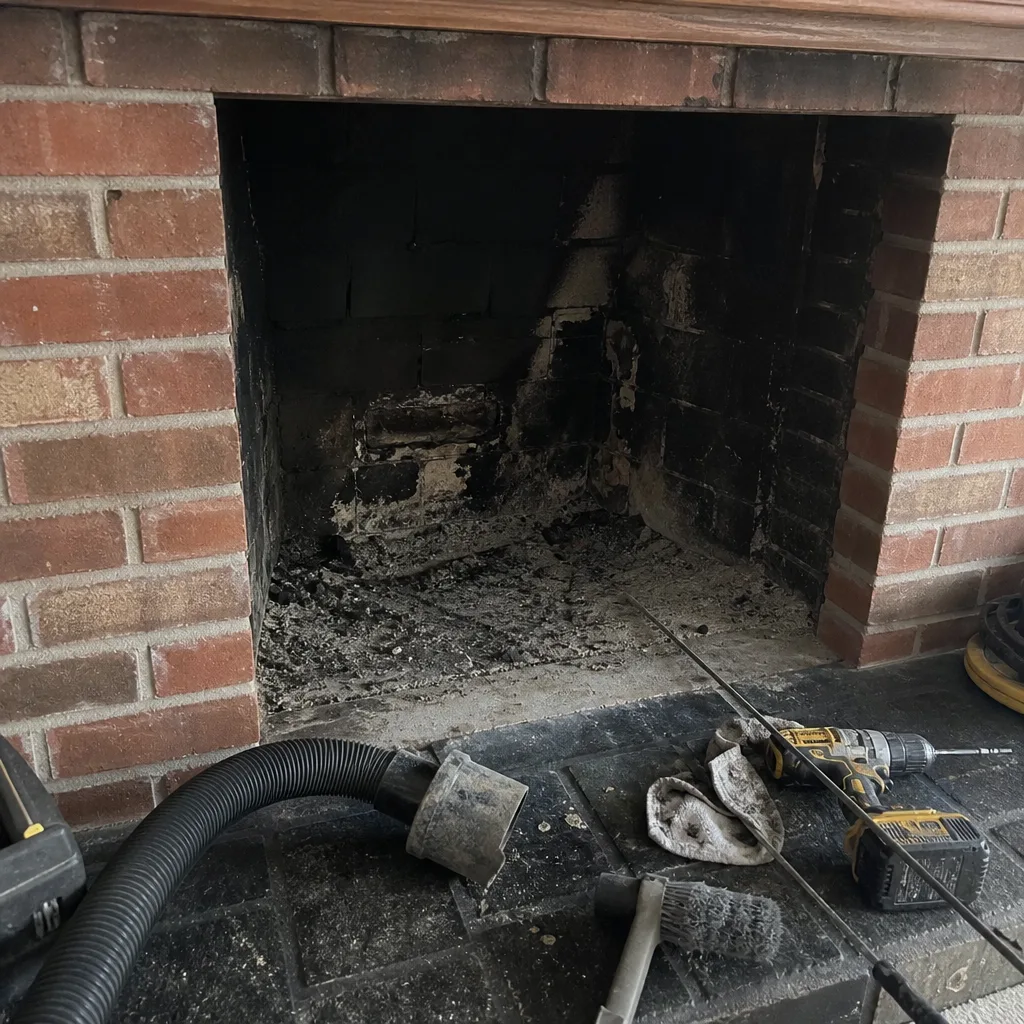
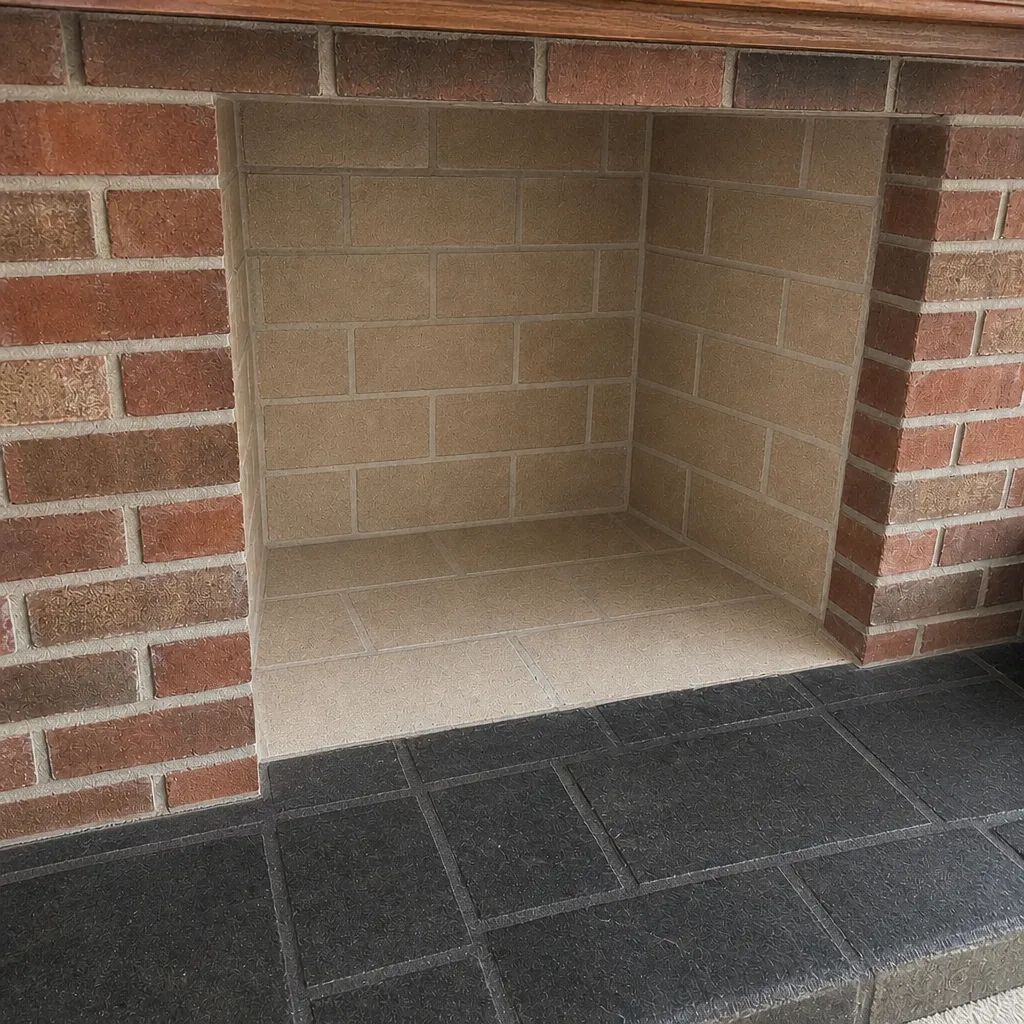
See the difference
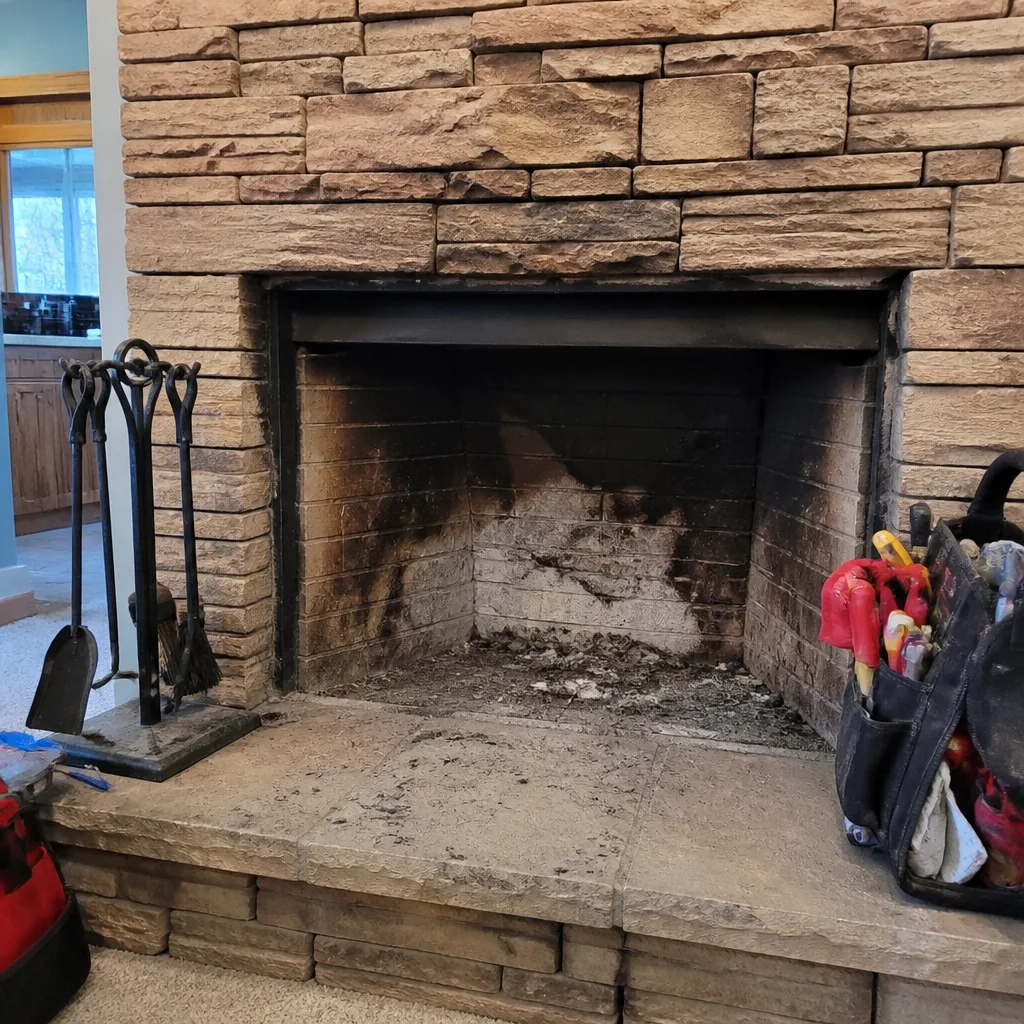 Before
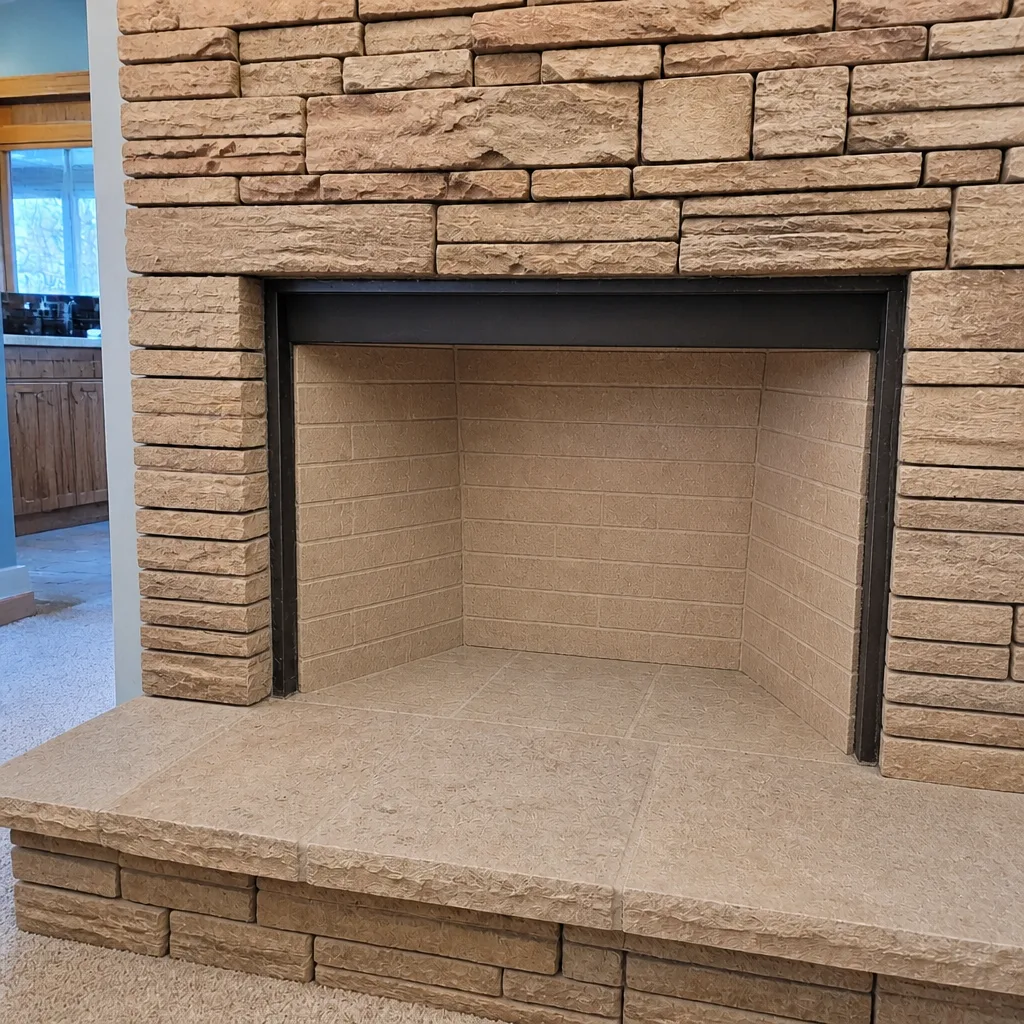 After
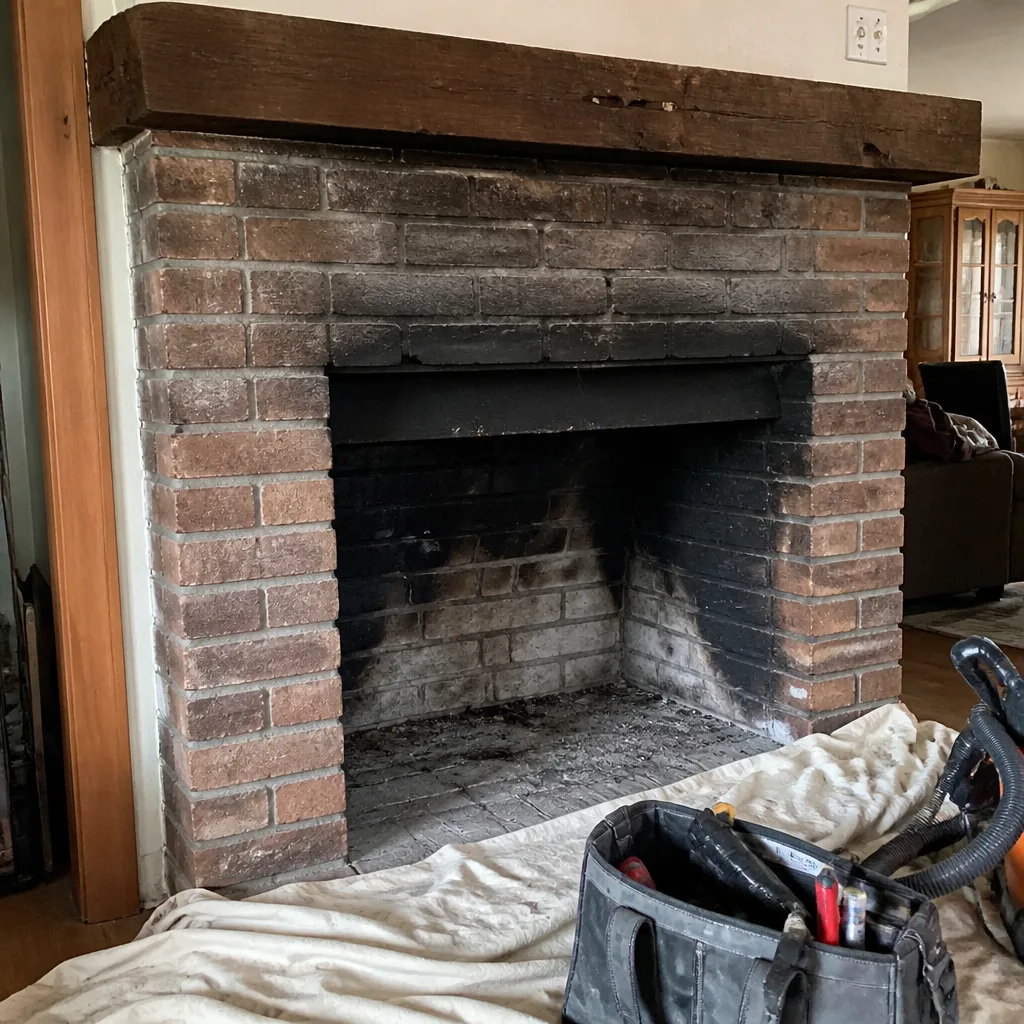 Before
 After
 Before
 After
When to Call a Professional
Some chimney conditions show clear signals that it’s time to have a technician look at the system. A draft problem that appears as smoke rolling back into the room, a solvent smell from the fireplace or a persistent smoky odor in the house, water stains on the ceiling, the mantel, or the fireplace surround, or visible damage to the brick, cap, or crown are all conditions that need diagnosis from a camera inspection. A fire not drawing cleanly, a damper that no longer closes, or visible creosote buildup inside the flue are also good reasons to schedule a visit. A routine annual sweep and inspection is best done before burning season, so any issue the inspection finds can be handled without rushing. We answer 24/7 and dispatch Sunday through Friday, 7am to 7pm.
Chimney Sweep South Hill offers free estimates in South Hill – call (877) 792-6671 for a direct conversation about your system. Our technicians have up to 15 years of experience, and every inspection comes with documented findings you can review yourself.
Frequently Asked Questions
The best brands for South Hill are the ones with published fuel-specific ratings and installation requirements: DuraFlex for flexible stainless liners, HeatShield for ceramic resurfacing, Olympia Chimney for caps, dampers, and chase covers, and Gelco, Famco, and Copperfield for other components. What matters most is whether the brand is correctly matched to your appliance, fuel type, and flue configuration, and whether the installer follows the manufacturer’s requirements. A premium brand installed incorrectly voids its own warranty. Call (877) 792-6671 for a free estimate and we’ll walk you through what fits your system.
Ask the contractor to name the specific liner family and alloy grade in the written proposal, and ask to see the manufacturer’s UL listing before the work begins. A specialist will answer both without hesitation. A generalist will speak in generalities. Also ask about insulation: professional-grade liners specify it, and a proposal that skips it is a red flag. Call (877) 792-6671 if you want to compare what a proposal says against what the product actually requires.
No. HeatShield is a ceramic resurfacing compound applied to the interior of a clay flue that is still structurally intact but has a degraded surface. It repairs porous, spalled, or hairline-cracked tile. It cannot fix a fully failed liner or separated tile. That distinction is made from camera footage, which is why we walk homeowners through the inspection findings before recommending any repair. Call (877) 792-6671 for a free estimate that includes a look at what’s actually in your flue.
The alloy grade determines how well the liner resists corrosion from the acidic condensate that forms in a flue. Wood-burning appliances produce different flue-gas temperatures and condensate chemistry than gas appliances, so a liner rated for one isn’t automatically right for the other. In a wet climate like South Hill’s, that difference matters over the life of the liner. The right grade is not a premium upgrade; it’s the specification. Call (877) 792-6671 and we’ll tell you which grade fits your appliance and fuel type.
The cap and the crown are the two most common points of water intrusion, and a chase cover applies if your chimney has a framed chase. Any time the flue is being discussed, it’s worth checking all three. Professional-grade components are fabricated to fit the actual chimney rather than approximated from a stock size. If any of these components are damaged, missing, or loosely fitted, water will find the gap. Call (877) 792-6671 for a free estimate that includes a look at your cap, crown, and chase cover.
No. Manufacturer warranties for professional-grade chimney components are tied to the installation. If the product requires insulation and the installer skips it, or the top termination doesn’t match the specification, the warranty can be voided. That’s why the brand and the installer have to be a single decision. Call (877) 792-6671 to have a proposal reviewed or to start a free estimate, and we’ll walk through the manufacturer requirements before any work is scheduled.
The Bottom Line
The brand behind your chimney system matters as much as the labor installing it. DuraFlex, HeatShield, and Olympia Chimney products are engineered to specific ratings and installation requirements, and those requirements are what make the warranty meaningful. A box-store component that approximates the right part creates problems that cost more to fix than the original work would have cost to do correctly. For South Hill homeowners, the practical move is to ask three questions of any proposal: what specific product family and rating, what are the manufacturer’s installation requirements, and who carries the accountability if the install fails. A specialist who handles both the sweep and the repair answers those questions with the same name. That’s the test.
Chimney Sweep South Hill handles sweeping, fireplace repair, chimney repair, inspection, and cap and crown work under one roof, working with professional-grade components from DuraFlex, HeatShield, and Olympia Chimney. If you’re ready to bring a proposal in for a second set of eyes, or to start from an inspection, call (877) 792-6671. We answer 24/7 and provide free estimates. Fast dispatch from 7am to 7pm, Sunday through Friday.
Written by the team at Chimney Sweep South Hill.