
Last updated November 25, 2026
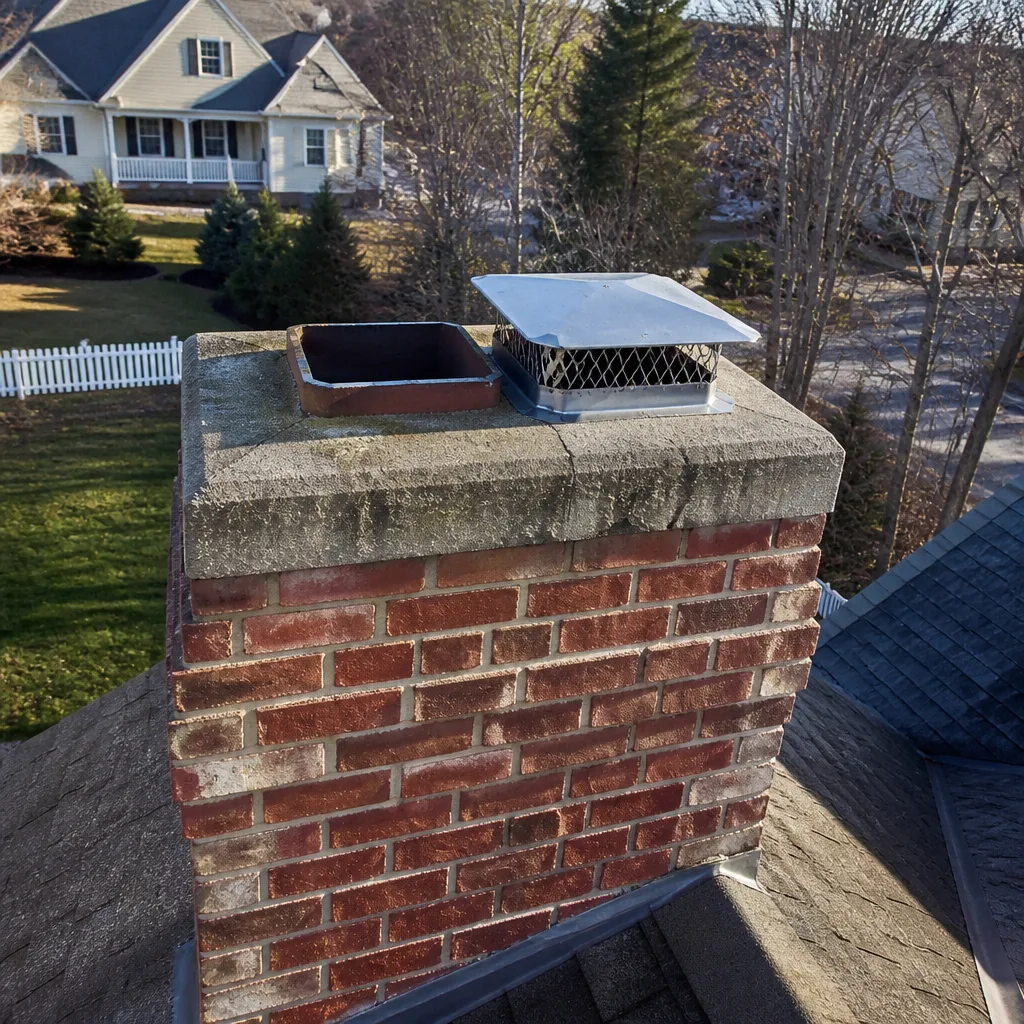 Sweep & inspection
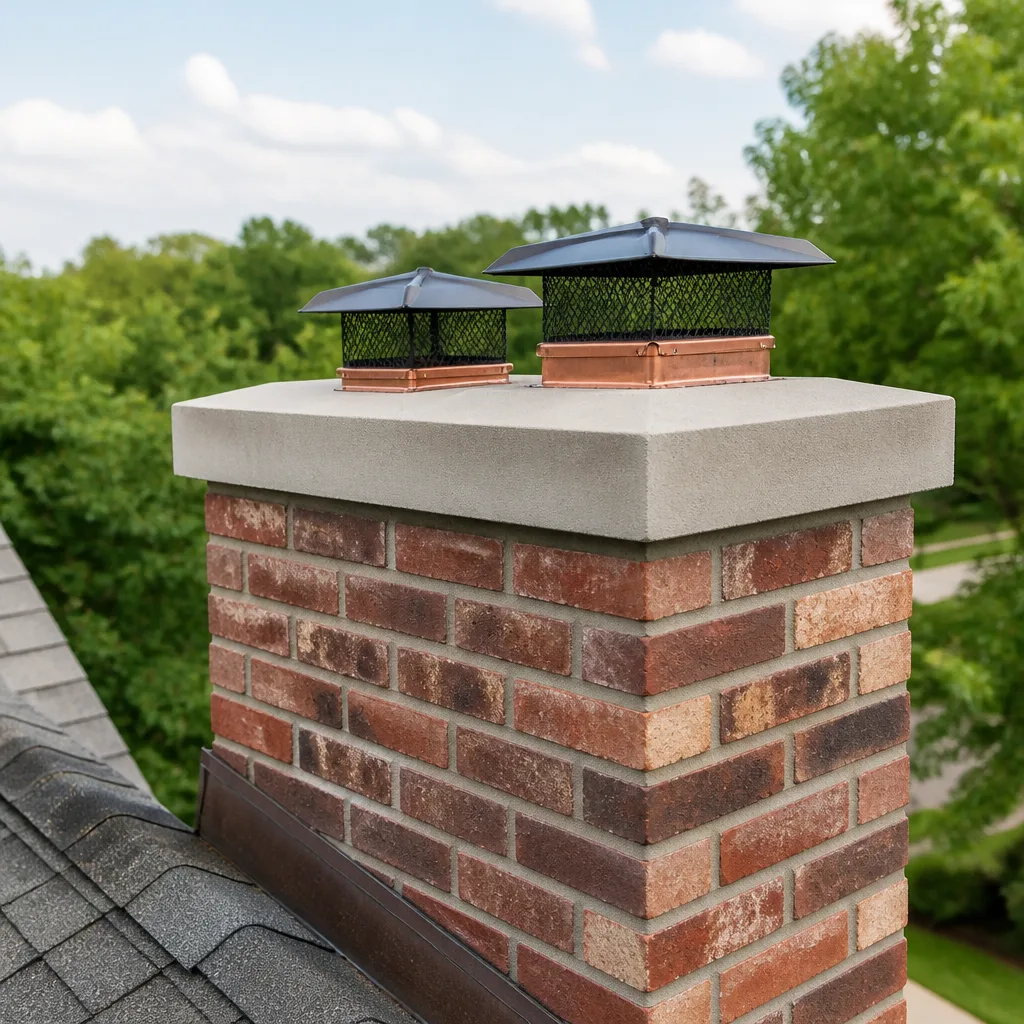 Caps & crowns
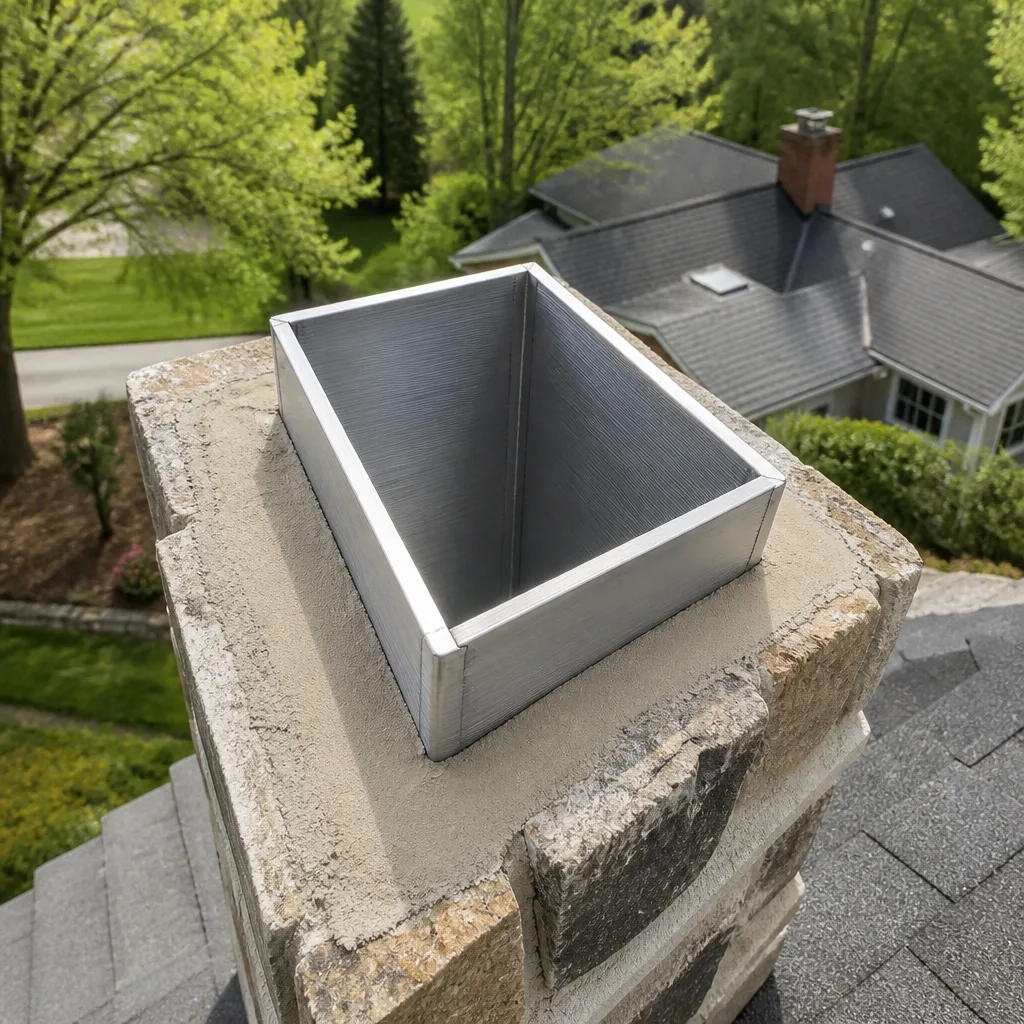 Flue relining
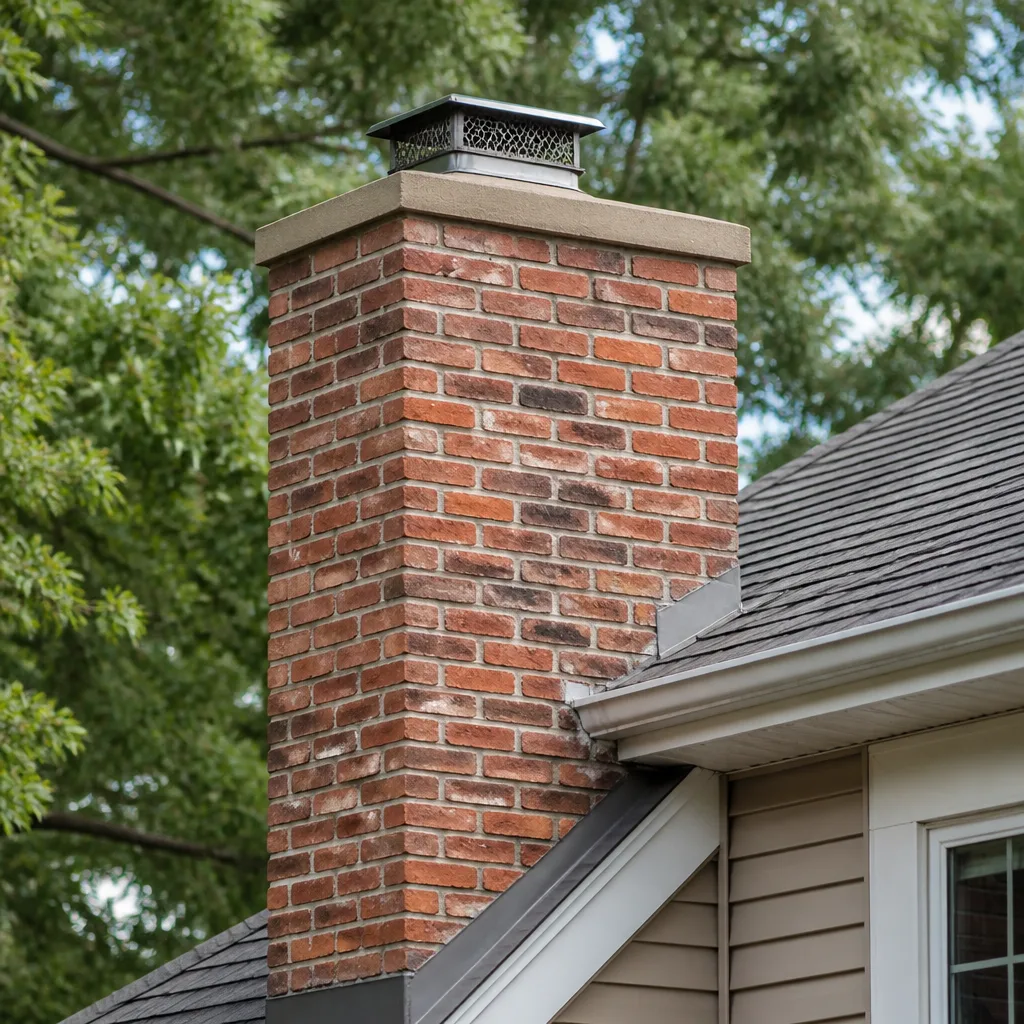 Masonry repair
 Gas fireplace service
Level 1 sweep and inspection to the NFPA 211 annual standard - flue, crown, cap, and flashing checked and photographed
Chimney sweep logs do not sweep chimneys. They loosen some creosote - which then falls where a brush and vacuum still have to collect it.
Chimney Sweep Troubleshooting in South Hill: Common Problems and How to Fix Them
A smoky fireplace and a creosote smell are both “chimney problems,” but they’re rarely the same problem. One might be solved with a routine sweep; the other might point to a liner that’s failed and needs repair before the next fire. Homeowners in South Hill tend to lump every symptom together under “something’s wrong with the chimney,” and that’s exactly where small issues turn into expensive ones. A slow draw, a backdraft, a musty smell in July, water stains on the firebox brick: each of these has a distinct physical cause, and knowing which one you’re dealing with is what decides whether a cleaning fixes it or a structural repair does. This guide maps symptoms directly to causes so you can stop guessing and act on the right solution.
Quick Answer
Most chimney problems in South Hill fall into a handful of categories: creosote buildup causing restricted flow and smoke rollout, negative pressure or a flue that’s too short causing backdraft, water intrusion through a failing crown or missing cap causing spalling and efflorescence, and a cracked or breached liner causing smells and unsafe draft. The fix depends entirely on which one you have, which is why a camera inspection comes before any repair recommendation. A sweep resolves the first; the rest need repair work at the structural layer.
Styles & brands we work with
- Sweep & inspection
- Caps & crowns
- Flue relining
- Masonry repair
- Gas fireplace service
Table of Contents
- Symptom-to-Cause: The Diagnostic Map
- Why Smoke Comes Back Into the Room
- How South Hill’s Wet Weather Accelerates Chimney Damage
- Smells After Cleaning: Creosote or Liner Breach?
- When You Need a Level 2 Camera Inspection
- What a Sweep-Only Company Can and Can’t Diagnose
- Cap, Crown, and Liner: The Three-Part Fix
- Seasonal Timing in South Hill
Symptom-to-Cause: The Diagnostic Map
The fastest way to stop guessing is to start with the symptom. Most chimney complaints that sound alike at the dinner table are actually different defects with different fixes. Here’s how we break them down when a homeowner calls us in South Hill.
| Symptom | Likely Cause | Usual Fix |
|---|---|---|
| Smoke rolls out of the firebox when you light a fire | Negative pressure, flue too short, or an oversized firebox relative to the flue | Draft assessment, possible cap change or flue extension |
| Smoke puffs back on windy days only | Downdraft from a nearby structure, tree, or roof line | Wind-direction analysis, cap selection, sometimes a taller flue |
| Fire burns sluggish, wood smolders, smoke lingers in the room | Restricted flow from creosote buildup or a blocked flue | Professional sweep |
| Musty or acrid smell when the fireplace is idle | Creosote odor pulling down the flue, or a liner breach | Sweep first, then camera inspection if smell persists |
| White chalky stains on exterior brick | Efflorescence from water migration through the masonry | Crown and cap work, masonry sealing |
| Flaking or crumbling brick face | Spalling from freeze-thaw cycles and water saturation | Structural repair, sometimes crown replacement |
| Rust streaks on the firebox or damper | Water intrusion from a failed crown or cap | Crown and cap replacement |
| Water stains on ceiling or chimney chase interior | Failed flashing, crown, or missing cap | Roof-level inspection, crown and cap work |
If your symptom isn’t on this map, don’t assume it’s nothing. It might just mean the issue is inside the flue where only a camera can see it. A chimney sweep is the right starting point because it’s both a maintenance service and a diagnostic step. We handle the sweep and anything we find, which means we’re not going to sweep, hand you a list of problems, and leave.
Why Smoke Comes Back Into the Room
Smoke in the room is the symptom homeowners in South Hill describe most often, and it’s also the one most often misdiagnosed as “just needs a sweep.” Sometimes that’s true. Often it isn’t. There are three distinct physical reasons a fireplace sends smoke into a room, and treating them as one problem is where money gets wasted.
Backdraft
A backdraft happens when the air pressure inside the house is lower than the air pressure outside, so the chimney pulls air down instead of pushing smoke up. Modern South Hill homes are tighter than homes built decades ago, and tight houses with bathroom fans, kitchen exhaust hoods, and dryers running simultaneously can create enough negative pressure to overwhelm a chimney’s draft. If your fireplace only smokes when the fan is on or the house is closed up, that’s the clue.
Downdraft
Downdraft is different. It happens when the wind pattern at the top of the chimney pushes air back down. A tall tree, a nearby roofline, or the shape of the cap can all create a wind eddy that overwhelms the draft at certain angles. In South Hill, hillside lots with tall evergreens on the windward side are especially prone to this. The fix is usually a better cap or a taller flue, not a cleaning.
Slow Draw
Slow draw means the fire burns but feels weak, smoke curls into the room on start-up, and wood smolders rather than burns. The most common cause is a flue restricted by creosote, especially after a wet winter when damp wood has been burned. A sweep is the right answer here, provided the flue isn’t also damaged. A camera inspection after the sweep confirms there isn’t a structural problem hiding underneath.
- Note the timing. Does it happen always, only on windy days, only when the house is closed up, or only on start-up? Each pattern points to a different cause.
- Note the weather. Cold and calm weather is when weak draft shows up most. Windy weather is when downdraft does.
- Note the fire. Damp wood, oversized logs, and a cold flue all make smoke worse. Try an established fire before you call it a chimney problem.
- Then call for an inspection. The physical cause is confirmable in a visit. Guessing at home rarely is.
How South Hill’s Wet Weather Accelerates Chimney Damage
South Hill sits in a marine-influenced part of western Washington where the wet season runs long and the masonry never fully dries out between storms. This matters to chimney troubleshooting because the majority of the structural problems we see in South Hill are water-driven, not fire-driven. The chimney gets blamed for “smoking bad” when the real problem is that the crown has been cracked for a season and the interior of the flue is wet.
Here’s how the wet climate accelerates wear on a chimney system:
- Spalling. Water saturates brick, then freezes and expands during the cold snaps that still hit South Hill in winter. The face of the brick flakes off. Once the face is gone, the brick absorbs water faster and the cycle speeds up.
- Efflorescence. That white powder or crust on your exterior brick is salt pushed out of the masonry by water moving through it. It’s not cosmetic. It’s the visible signature of a moisture path.
- Liner deterioration. A clay tile liner that’s continually damp cycles between wet and dry and cracks faster than one that stays dry. Once it cracks, moisture gets behind it and the whole flue becomes a water channel.
- Crown failure. The crown is the concrete slab at the top of the chimney that sheds water away from the flue. It’s the most exposed surface on the whole structure, and it’s the first thing to crack in a freeze-thaw pattern.
- Mortar joint erosion. The mortar between bricks is softer than the brick itself, and in South Hill’s wet season it erodes faster than the brick does. Once joints recede, the wall loses structural coherence.
This is why cap, crown, and liner are always discussed together when we’re talking about waterproofing. A cap keeps rain out of the flue. A crown moves water off the top. A liner keeps the interior of the masonry dry. Fix one and ignore the others and the chimney stays wet. That’s the difference between cleaning day and long-term chimney protection. Roofers handle roofs; a chimney repair crew handles the structure that rises above the roofline. If the wet weather has already caused visible damage, that’s the layer that needs the work.
Smells After Cleaning: Creosote or Liner Breach?
A persistent smell after a sweep is one of the most misread signals in chimney troubleshooting. Some odor after cleaning is normal and fades within a few days. A smell that lingers, gets worse in warm weather, or smells specifically acrid or charred instead of sooty is a different signal, and it usually means the problem isn’t residual creosote.
Two likely causes, and the difference matters:
- Residual creosote smell. Soot and creosote deposit on the firebox walls, damper, and smoke chamber in a way that a sweep loosens but doesn’t always fully remove. The smell is sooty and faint and fades. A follow-up cleaning of the firebox and smoke chamber usually resolves it.
- Liner breach. A crack in the flue liner lets creosote and combustion gases escape into the space between the liner and the exterior masonry. That masonry soaks up the smell and releases it back into the house slowly. The smell is stronger, doesn’t fade, and often shows up specifically when the fireplace is not in use, because the indoor air is pulling chimney air down the flue.
The tell is timing. Residual smell peaks right after cleaning and fades. A liner breach smell persists, gets stronger in humid weather, and comes back as soon as the fire has been out for a day. If you’re in that second category, the answer is a camera inspection, not another sweep. We use camera scanning as the standard step before recommending a liner fix because a crack has to be seen to be confirmed. HeatShield resurfacing is worth knowing about here: for qualifying chimneys it restores the liner from the inside without a full tear-out, which is a materially different repair path than full liner replacement.
When You Need a Level 2 Camera Inspection
Chimney inspections come in levels, and the level you need depends on what you’re trying to answer. The point of knowing the levels is that you don’t overpay for a scan you don’t need and you don’t skip a scan that would have caught the problem.
Level 1: Visual Inspection
A Level 1 inspection is a visual check of the accessible parts of the chimney system, done without special tools. It’s the right call for a chimney that’s in routine use, has no known issues, and just needs an annual safety check. If you’ve been burning clean wood, haven’t had a chimney fire, and haven’t had any of the symptoms in the map above, Level 1 is sufficient.
Level 2: Camera Scan
A Level 2 inspection includes everything in Level 1 plus a video camera scan of the flue interior, and access to parts of the chimney not normally visible, sometimes including the attic and crawl spaces. This is the level that actually confirms a diagnosis when the symptom suggests an interior problem. In our South Hill work, Level 2 is standard for:
- A change in fuel type, appliance, or the way the fireplace is used.
- A property transaction where the buyer or seller needs documentation of the chimney’s condition.
- After a chimney fire, even a small one.
- Any persistent smell, draft complaint, or visible crack that hasn’t been explained.
- Before a liner repair or resurfacing decision, so the scope is confirmed with evidence.
- After an earthquake or a significant storm that could have shifted the masonry.
The documentation from a Level 2 inspection is what insurance companies and real-estate transactions expect. When we deliver an inspection, we deliver it with the images and findings that meet that bar. The point of an inspection is to know exactly what you have before fire season, not to sell a repair. If the chimney is sound, we tell you that, and the inspection stands alone as a standalone service.
What a Sweep-Only Company Can and Can’t Diagnose
The most expensive chimney problems in South Hill aren’t the ones that get ignored. They’re the ones that get misdiagnosed because the company that showed up only does one thing. A sweep-only operator can clear the flue and tell you it looks fine from the top. What they can’t do is address the structural layer underneath, and that’s where most of the real problems live.
Here’s the pattern we hear from homeowners who call us after a sweep-only visit hasn’t solved the issue:
- The symptom is treated as a cleaning problem when it’s a structure problem. A draft complaint gets a sweep when the actual cause is a missing cap or a flue that’s too short. The sweep helps temporarily and the problem comes back by the next cold snap.
- A visible crack gets called a “small cosmetic issue” when it’s a liner breach. An exterior crack in the chimney chase is usually cosmetic. A crack inside the flue is not. Distinguishing them requires a camera.
- The crown gets patched rather than replaced. Field-improvised patching on a crown fails within a season in South Hill’s wet weather. A crown replacement with proper materials is the actual fix.
- Liner resurfacing isn’t offered at all. A sweep-only company doesn’t stock HeatShield or work with the brands that support a resurfacing path, so the only option they can quote is full liner replacement. That’s not a better answer, it’s a narrower one.
- The findings aren’t documented. Without proper photos and a written report, insurance and real-estate transactions can’t be completed, and the homeowner is stuck.
The difference comes down to what’s on the truck and who’s doing the work. We work with professional-grade chimney brands including DuraFlex, Olympia Chimney, and Famco for liner and component work, and we handle sweep, repair, inspection, and cap and crown under one provider. That means the diagnosis and the repair come from the same person who did the sweep, and the accountability doesn’t get handed off. If your fireplace needs interior work, that’s what fireplace repair covers.
Cap, Crown, and Liner: The Three-Part Fix
When we’re asked to solve a water-related chimney problem in South Hill, the answer almost always involves all three of these. Fixing one and ignoring the other two is why so many “repaired” chimneys keep having the same problem.
The Cap
A chimney cap sits on top of the flue and does two jobs: it keeps rain out and it keeps animals out. A missing cap is one of the most common sources of water intrusion we see. A bad cap is almost as bad as no cap, because a cap that’s the wrong size, has failed fasteners, or has a clogged screen can create downdraft. Manufacturers like Copperfield make caps sized to the flue, and a proper fit matters. A cap fixed with field-improvising solutions won’t last a South Hill winter.
The Crown
The crown is the concrete slab at the very top of the masonry that overhangs the chimney and directs water off and away. A crack in the crown lets water run into the masonry instead of off the surface. Once that happens, the chimney soaks and the spalling and efflorescence pattern starts. Crown work should use manufacturer-grade materials, not a mortar mix improvised at the top of a ladder. A properly built crown lasts years; a field patch does not.
The Liner
The liner is the conduit that keeps combustion gases inside and moisture outside. When it cracks, everything else becomes harder to hold together. Depending on the condition, three paths exist:
- Sweep and inspect. If the liner is intact, no repair is needed. Confirm with a camera and move on.
- Resurface. HeatShield resurfacing can restore a liner that has cracks within the qualifying range, without tearing out the old liner. This is a meaningful cost saving on the right chimney, and it’s a path that only a company that carries the product can credibly offer.
- Replace. When the liner has failed beyond resurfacing, a new liner installed with a professional-grade system (DuraFlex or Olympia Chimney, for example) is the durable fix.
Which path applies is a camera-and-evidence decision, not a guess. We don’t recommend liner work without images you can see yourself. If the liner is sound, we say so, and the only work is the sweep. If it’s not, you see the crack before you agree to anything.
Seasonal Timing in South Hill
Chimney troubleshooting is seasonal in South Hill, but not in the way most homeowners assume. The urgency isn’t hourly. It’s the calendar. The best time to find a problem is months before you need the fireplace, so you’re not choosing between a rushed repair and a cold winter.
Two windows matter:
- The wet season (late fall through early spring). This is when water intrusion is doing the most damage. If you already know you have a crown issue, a cap issue, or visible spalling, this is the season to fix it, because every wet week accelerates the underlying damage.
- The dry season (late spring through early autumn). This is the best window for structural work like crown replacement, liner work, and masonry repair. The chimney dries out, materials cure properly, and there’s no rain risk on open mortar joints. It’s also when a sweep and inspection are easiest to schedule ahead of the first fire.
Our advice is straightforward: get the sweep and inspection done during the dry window, fix whatever it turns up, and go into the burning season with a known chimney instead of an untested one. If something has already gone wrong mid-season, we can still help, it’s just a tighter schedule and a wetter working environment. We answer 24/7 on the phone line. Fast dispatch from 7am to 7pm, Sunday through Friday.
Common Mistakes to Avoid
- Burning wet or unseasoned wood because it’s what’s on hand. Wet wood smolders, produces more creosote, and creates the “slow draw” symptom that gets blamed on the chimney. Season your wood and store it covered.
- Assuming a smoky fire is always a sweep problem. If the smoke appears only on windy days or only when the house is closed up, it’s a draft or pressure problem, not a cleaning one. Getting swept repeatedly won’t fix it.
- Treating a missing or damaged cap as a minor item. A missing cap on a South Hill chimney gets rain into the flue for months. Proper cap installation is one of the highest-value jobs a homeowner can do and one of the most commonly deferred.
- Patching a crown instead of replacing it. A mortar smear across a cracked crown fails within a season in wet weather. A crown replacement with proper materials is what stops the water path.
- Skipping the camera because the visual inspection “looked fine.” A visual inspection sees what’s visible. A liner breach is by definition not visible without a camera. If you have a persistent smell or a draft complaint, the visual isn’t the answer.
- Letting a sweep-only company talk you into full liner replacement when resurfacing might apply. HeatShield resurfacing is a legitimate alternative for qualifying chimneys. If the only option on the quote is full tear-out, get a second opinion.
- Putting off an inspection because you don’t want to hear bad news. The cost of finding out late is higher than the cost of finding out early. An inspection is a report, not a verdict. It tells you what you have.
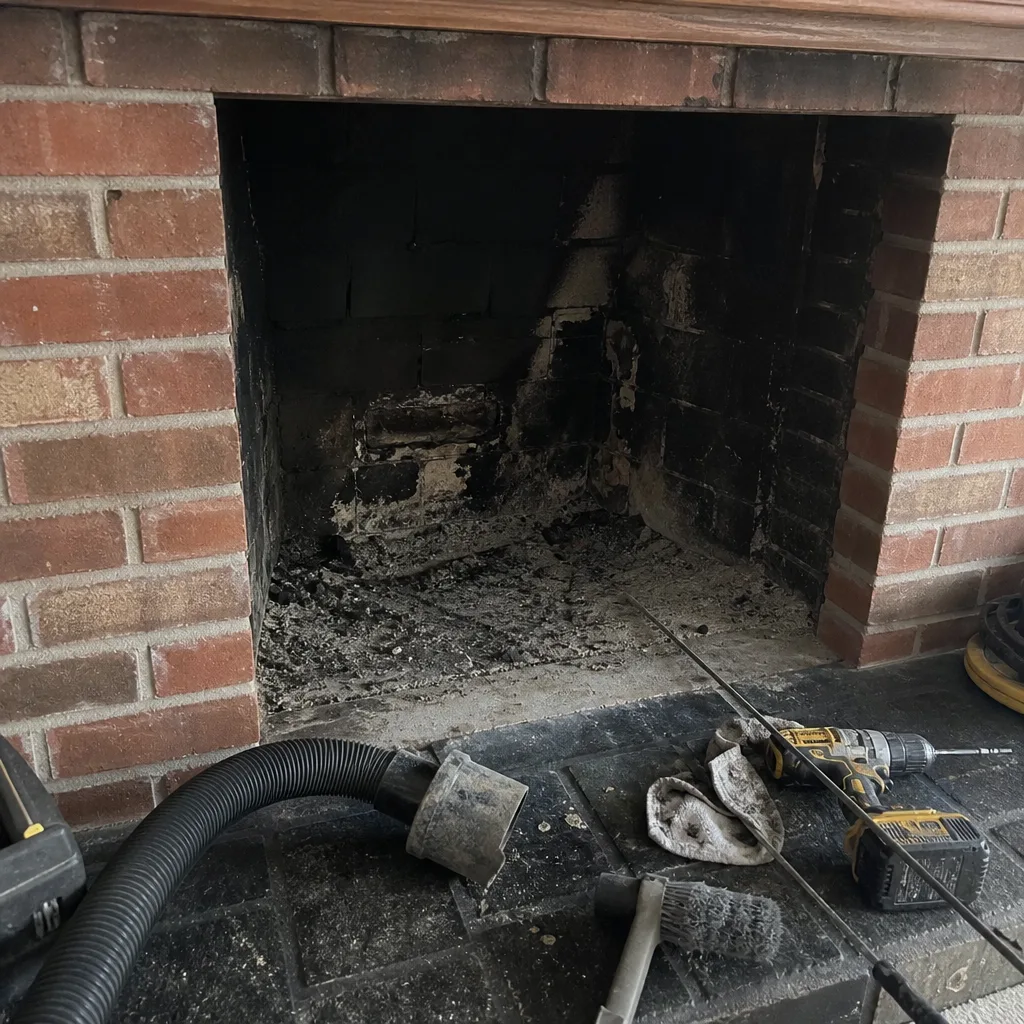
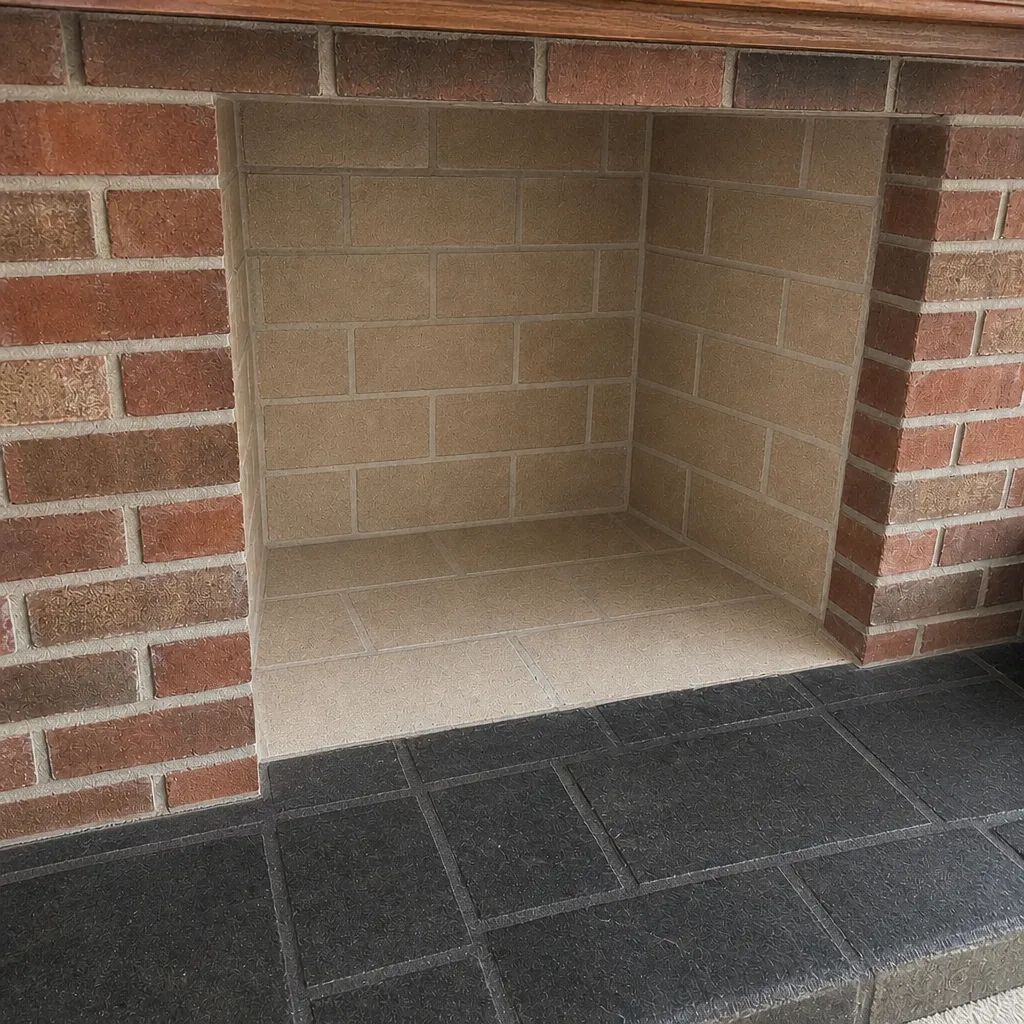
See the difference
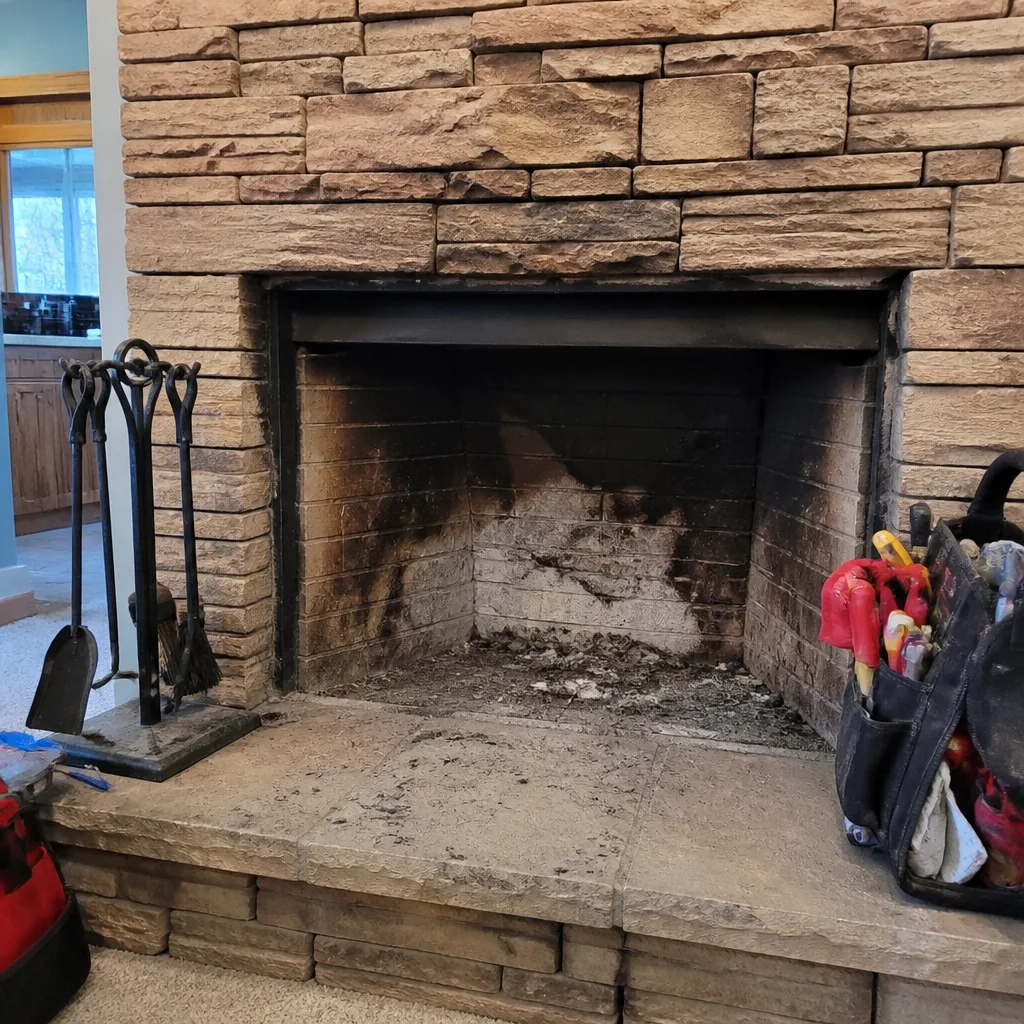 Before
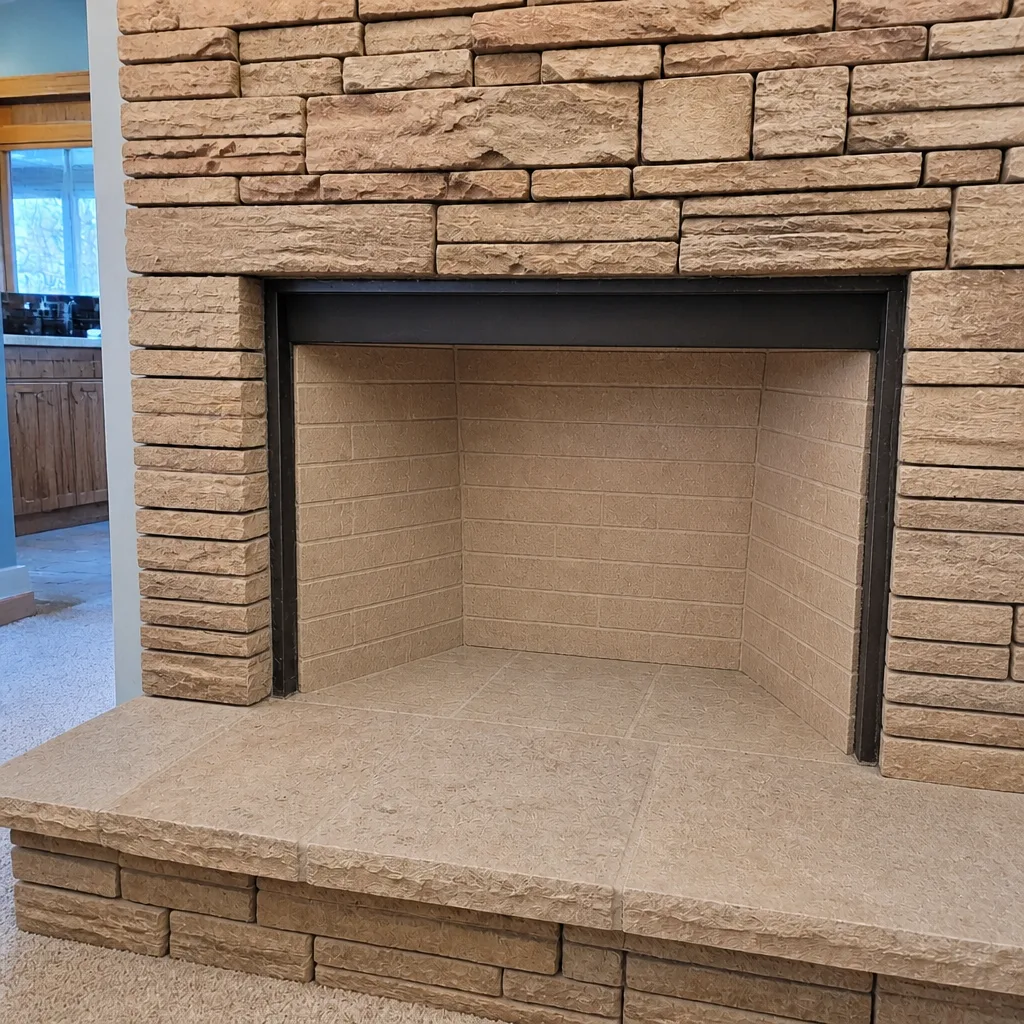 After
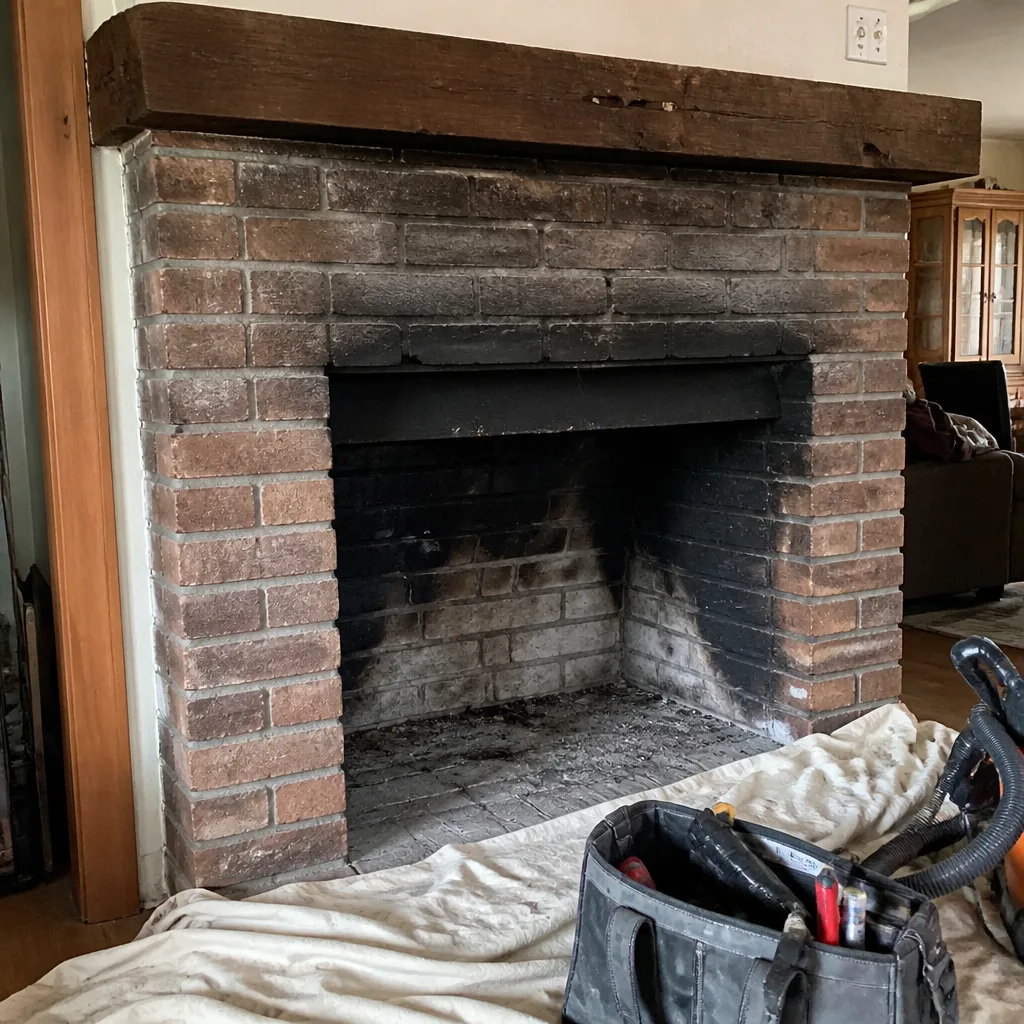 Before
 After
 Before
 After
When to Call a Professional
You should call a professional when the symptom you’re seeing is one you can’t diagnose from the ground: any smoke rolling into the room, any persistent smell after a sweep, any visible crack or missing cap, any water stain near the chimney, or any inspection you’ve been meaning to do before a property transaction. You should also call if you’ve had a chimney fire, even a small one, because the damage is often interior and the visual result can look like nothing happened. Chimney Sweep South Hill offers free estimates in South Hill. Call (877) 792-6671. Our technicians have up to 15 years of experience, and we handle the sweep and anything we find in a single visit instead of handing you a list. The estimate is free and the price is set per job by the written estimate.
Frequently Asked Questions
Because a sweep fixes creosote buildup, not draft problems. If the smoke appears only on windy days, only when exhaust fans are running, or only on start-up, the cause is negative pressure, downdraft, or a flue that’s too short, and none of those are resolved by sweeping. The right next step is a camera inspection that looks at the full system, not just the flue interior. Call (877) 792-6671 for an exact quote on an inspection. Estimates are free.
It means water is moving through the masonry. Efflorescence is salt pushed out by moisture migrating from inside the brick to the surface, and it’s the visible sign of an active water path. In South Hill, that usually points to a cracked crown, a missing or failed cap, or failing flashing at the roof line. It’s not a cosmetic issue and it doesn’t go away with cleaning. A camera inspection and a look at the crown and cap will confirm where the water is getting in.
Only a camera inspection can tell you. If the cracks are within the qualifying range for HeatShield resurfacing, the liner can be restored from the inside without a full tear-out, which is a different and usually cheaper path than full replacement. If the damage is beyond that, a new liner installed with a professional-grade system like DuraFlex or Olympia Chimney is the fix. The decision is made from images you can see yourself, not from a recommendation alone. Call (877) 792-6671 to schedule the inspection. Estimates are free.
It depends on the cause. A fire that puffs some smoke into the room on start-up from cold-flue draft is annoying but not urgent. A backdraft that forces combustion gases into the living space, especially in a tight South Hill home with exhaust fans running, can mean carbon monoxide is coming into the house. If the smoke comes in while the fire is burning and the room feels stuffy, or if you have a CO alarm, treat it as a safety issue and get it inspected before the next fire. We answer 24/7. A call outside dispatch hours is booked into the next opening, Sunday through Friday, 7am to 7pm.
The best window is the dry season, before the first fire of the fall. If you already know you have a repair to make, doing it in the dry months lets the masonry dry out and the materials cure properly, which is a real advantage in South Hill’s wet climate. If you’re selling or buying a home, the inspection should happen before closing and needs to include the documentation that meets insurance and real-estate expectations. For an inspection, call (877) 792-6671. Estimates are free.
Yes, if the chimney has no known symptoms and it’s routine maintenance. A sweep and a visual inspection are enough for a healthy chimney in normal use. The camera becomes necessary when there’s a symptom the visual can’t explain: a persistent smell, a draft complaint, a visible crack, or a property transaction. Skipping the camera on a chimney that has symptoms is how the underlying problem gets missed. Call (877) 792-6671 to talk through what level of inspection fits your situation. Estimates are free.
The Bottom Line
Chimney troubleshooting in South Hill comes down to matching the symptom to the actual defect, not to the closest guess. Smoke in the room is a draft or pressure question, not automatically a cleaning one. A smell that won’t fade after a sweep points to a liner breach, not residual creosote. White powder on the brick is water moving through the masonry, not cosmetic weathering. And the wet South Hill climate is the reason so many structural problems get worse each season they’re left unaddressed. Cap, crown, and liner together are what actually keep a chimney dry. Get the sweep, get the inspection, fix what the evidence shows, and go into burning season with a known chimney system. If you’re not sure where to start, call and we’ll talk through the symptom. That’s what we do. For a Chimney Sweep South Hill visit, or to book a sweep, repair, inspection, or cap and crown job, call (877) 792-6671 for a free estimate. We answer 24/7. Fast dispatch from 7am to 7pm, Sunday through Friday.
Written by the team at Chimney Sweep South Hill.